


In 1929, the English writer G.K. Chesterton imagined a modern reformer who comes across a gate blocking a road and thinks, I don’t see the use of this; tear it down.
The more intelligent reformer won’t let you tear it down until you do see the use of it. “Go away and think,” wrote Chesterton. “Then, when you can come back and tell me that you do see the use of it, I may allow you to destroy it.” Put simply, before you tear down a fence, find out why it was built in the first place.
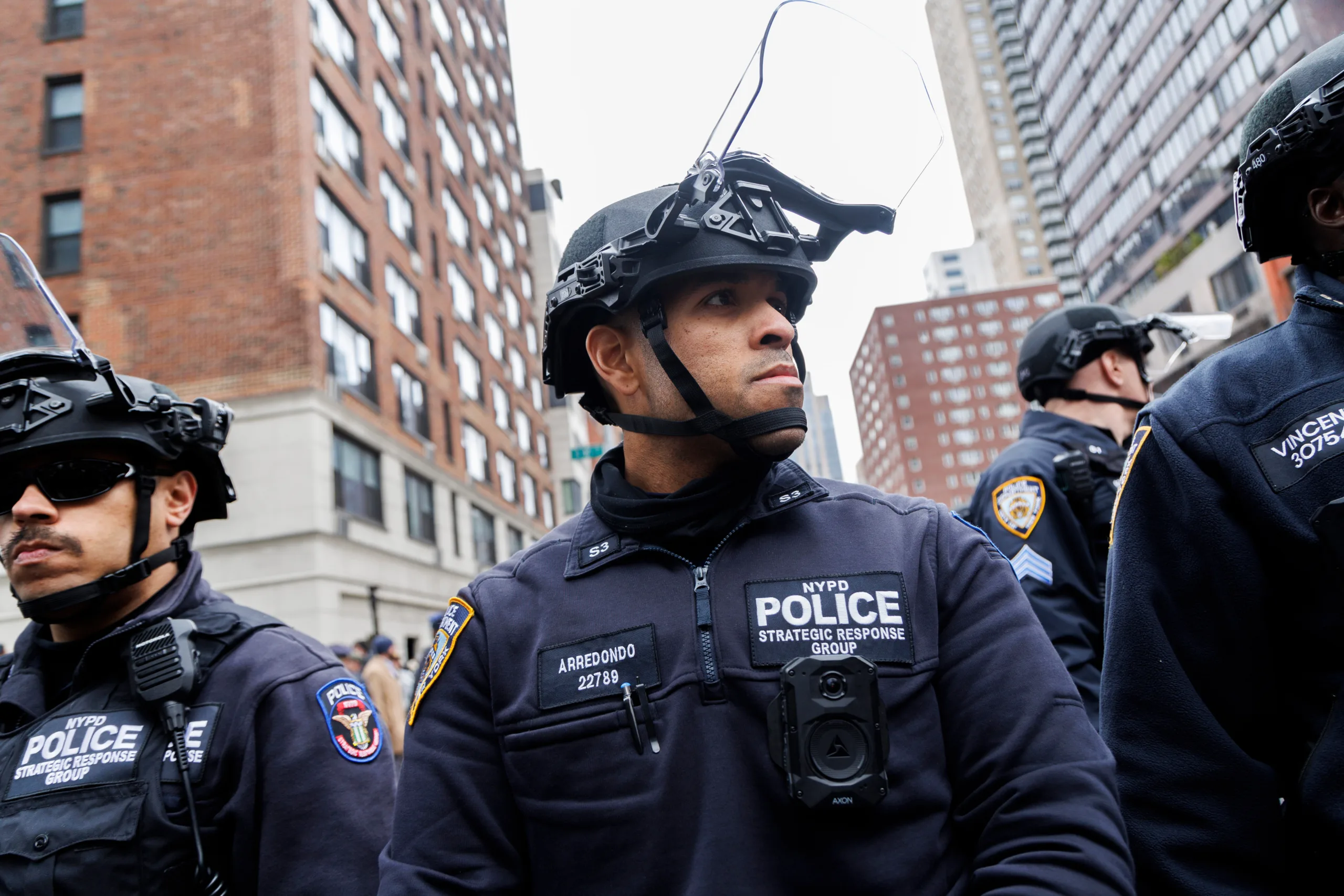
Mayor Zohran Mamdani and Police Commissioner Jessica Tisch have announced plans to disband the NYPD’s Strategic Response Group (SRG). Civilians will take over policing some rallies, while a new unit will handle others. But what is SRG? What does it do? And how did it come to be?
The modern era of NYPD crowd control goes back to the Crown Heights riots of 1991, when the department stood back as three days of violence and destruction engulfed the Brooklyn neighborhood. Chief Louis Anemone was tasked with making sure that never happened again. He developed the department’s “Disorder Control Guidelines,” distributed to every member of the service.
As Anemone told me, “These simple solutions involved an enormous amount of training at every level of the organization from the executive staff right on down to the cop on the street. We needed to provide leadership to these officers, leaders, and supervisors who have been trained in each aspect of these duties, so that the real-life scenario is not the first time they experience civil-disorder control.”
Regular training is expensive. Cops ain’t cheap. And many police assignments, including crowd control, require specialized skills. SRG was established in 2015 to unify and improve the NYPD’s response to protest and civil disorder. It gave the city a pool of 500 skilled officers under a single command, ready to respond quickly to emergencies—a luxury in a country where most police departments can’t even dream of employing 500 officers.
But five years later, on May 31, 2020, the system failed. Following the murder of George Floyd and the subsequent burning of a Minneapolis police precinct, the NYPD was woefully unprepared for mass protests that brought significant destruction and looting. After some self-reflection and a critical report from the Department of Investigation, SRG improved its training and got its act together.
Most protests require little or no police intervention. But some do. At a large march, somebody has to manage the crowds and keep routes open for emergency access. If counterprotesters threaten marchers, somebody has to protect them. And if someone starts throwing punches, smashing windows, or spray-painting a building, the ideal response is for police to enter the crowd and arrest that individual—not impose collective punishment. SRG is trained to do that. Your average cop is not.
In a city with thousands of protests, rallies, and large gatherings each year, maintaining order is a real job. In 2025, the NYPD facilitated 4,255 protests. SRG was on standby for 245 and called in to make arrests at 41. (The NYPD’s “red-light, green-light” policy on making arrests during protests and marches seems to require a specialized unit of its own.)
Next year, civilians may handle most of these events. That’s fine, if not strictly necessary. But the easy protests aren’t the ones that generate viral videos. And sometimes protests are mostly peaceful until they’re not. Then what?
Many SRG officers will be reassigned to the Patrol Support Division (PSD). But these officers will largely be precinct-based, as they were before SRG was created in 2015. That leaves the old problem of pulling cops from precincts and borough-based task forces to handle a crisis.
If the plan on a bad night is to call precincts and ask each to send a few officers, who do you think will show up? In police parlance, they’re called the “broken toys”: cops who may never have worked or trained with one another, and who may not play particularly nicely with the people they’re being sent to police. Already pissed off that they’re there, they’ll be expected to figure things out in the middle of a hostile crowd. Chaos and lawsuits will ensue.
Or perhaps the NYPD will establish a new crowd-control unit that will—or at least should—resemble the old one. The difference, as is customary in policing, will be a new acronym.
City Hall says the new Patrol Support Division will have vetted officers with specialized training. Good. But how many will be available on a given shift? How quickly can they get across town? Who’s in charge when they arrive, and what are they supposed to do? How often will they train together?
City Hall also says the overhaul will cost nothing extra. But regular training costs money and takes officers off the street. Where is that time, and money, coming from?
If the Patrol Support Division can send a team that trains together and knows how to act with restraint in a crowd-control situation, City Hall will have effectively rebuilt one of SRG’s most important functions under a different acronym. If it ends up pulling whoever happens to be available from precincts, we’ll get a worse response than we have now.
Some New Yorkers want demonstrations—and, among a fringe, all policing—left entirely to civilians. That’s a political choice. If elected officials go that route, they can take responsibility for it. But City Hall’s plan still calls for police to intervene when necessary. So who are these cops, and will they be ready?
Chesterton’s reformer had to explain what the fence was there for before pulling it down. City Hall should be able to tell us who answers the call after SRG, and how they’ll be prepared.
To paraphrase Chesterton: “SRG was not set up by somnambulists who built it in their sleep. It is highly improbable that SRG was put there by escaped lunatics who were for some reason loose in the street. Some person had some reason for thinking SRG would be a good thing for somebody…. And yet there are reformers who get over this difficulty by assuming that all their fathers were fools; but if that be so, we can only say that folly appears to be a hereditary disease.”