



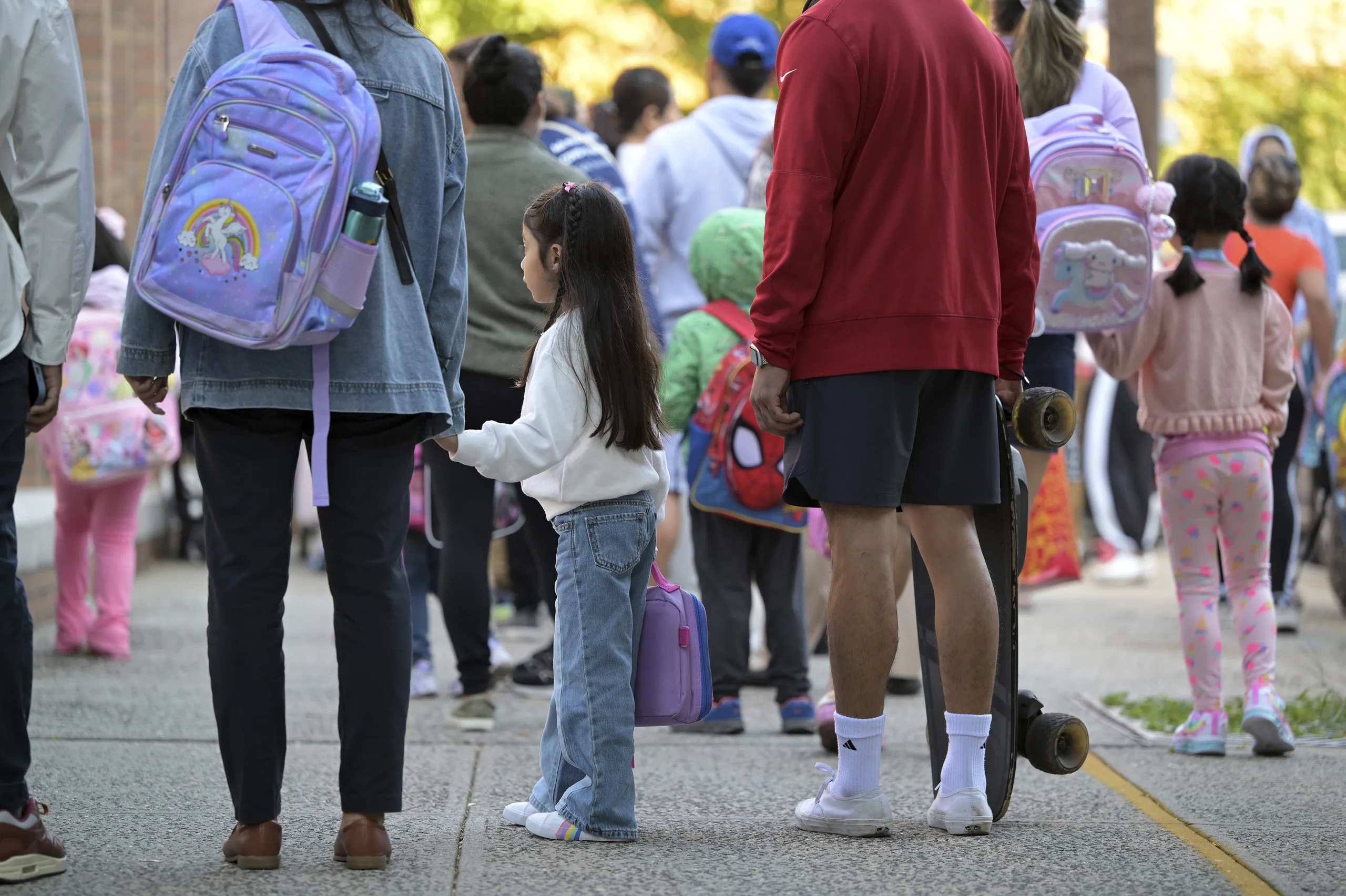
As New York City families enter another school year, many caregivers are once again confronting the challenge of finding affordable, reliable childcare. For working parents, the shift from summer to fall doesn’t lessen the need for care; it simply moves it to before‑ and after‑school hours, school holidays, professional development days, and the inevitable gaps families fill through grandparents, neighbors, friends, or paid providers.
For far too many families — especially low‑income households, immigrants, Black and Brown New Yorkers, and families of children with disabilities — summer makes the shortcomings of the city’s childcare system especially visible. With nearly half a million children under five in New York City and the average cost of childcare exceeding $25,000 annually, the current system is unsustainable.
This reality is one reason the NYC Commission on Gender Equity released the Marshall Plan for Moms Task Force report and recommendations. Developed over two years by childcare providers, parents, advocates, labor leaders, and policy experts, the report recognizes what caregivers have long known: care work is essential infrastructure.
When childcare is unavailable or unaffordable, parents cannot work. When care workers are underpaid and providers struggle to stay afloat, families lose critical support systems. And when caregiving responsibilities fall disproportionately on women, economic inequality deepens.
Caregiving remains deeply gendered. Women — particularly women of color — continue to perform most of the unpaid labor at home while also making up about 90% of the underpaid childcare workforce in NYC. But this is not simply a “women’s issue.” It is an economic justice issue, a public health issue, and a racial justice issue. And it affects anyone who helps sustain families and communities every day, including chosen family, neighbors, and grandparents.
The Marshall Plan for Moms Task Force’s recommendations offer a roadmap for building a childcare system that works for families year‑round. The report calls for investments in extended‑hour care, drop‑in childcare, summer programming, services for children with disabilities and special needs, and a well‑supported childcare workforce.
These recommendations align with steps the administration is already taking. This year’s launch of free, full‑day, 2‑K that runs primarily year round, acknowledges what working families have long experienced: patchwork childcare arrangements make every season — especially summer and back‑to‑school — stressful and unaffordable. Consistent, year‑round care helps families maintain stability while ensuring children have opportunities to learn and thrive. In fact, full implementation of 2‑K and 3‑K would lift 12,000 New Yorkers — 4,100 of them children — out of poverty each year.
Caregiving and public health are deeply connected. Investments in maternal health, early childhood mental health, youth health services, and community‑based care strengthen families long before a crisis occurs.
The COVID‑19 pandemic underscored how much our city depends on caregivers. Parents balanced work and caregiving responsibilities simultaneously. Childcare providers remained essential lifelines for families. Care workers kept communities functioning during one of the most difficult periods in our city’s history.
New York is now leading by treating caregiving not as a private burden but as a shared public responsibility — and as one of the most powerful levers for improving the city’s economic and social wellbeing. Investing in childcare, care workers, and caregivers strengthens families, supports economic justice, improves public health, and advances gender and racial equity.
When we invest in caregivers, we invest in children, workers, businesses, and communities. We create a city where all New Yorkers — regardless of gender, income, race, immigration status, disability, parental status, or family structure — have the support they need to thrive.
Childcare remains one of the most significant challenges families will face throughout the school year. Building a city that works for children begins with building a childcare system that supports caregivers every day of the year.