


Mayor Mamdani’s brand-new charter revision commission is taking suggestions from anybody and everybody about how to make the city fairer and more efficient, a topic that’s always worth discussing. “We are absolutely lifting up the notion of efficiency, but also with excellence, with the intention of delivering smarter, more effective governance into the lives of New Yorkers. And it’s already been really quite extraordinary,” the panel’s chairman, Patrick Gaspard, told me. “Over 350 New Yorkers have joined us and engaged us with their very best ideas; 140 of them have already submitted public testimony.”
At the same time, by coincidence, the mayor and City Council are trying to close a budget gap before the fiscal year ends on June 30. They can deal with both issues by mandating that the Council give full, formal, serious consideration to the often-overlooked work of the city’s Independent Budget Office.
The IBO, created by a 1989 charter revision commission, provides thoughtful, high-quality analysis of the city’s economy and budget. The agency has built-in political independence: the mayor plays no role in selecting the head of the office, and its budget is established by law as 10% of the Office of Management and Budget. By law, the agency has access to a broad range of city data, which allows its analysts and economists to spot trends and management problems and suggest solutions.
A jewel in the crown of local government, the IBO answers surprisingly complicated queries from politicians, journalists and the general public. The office regularly publishes “What If?”, a set of suggested ways to raise money or trim expenses that are, like the office itself, blissfully free of political considerations. For example, the office noted, using 2023 data, that 2.5 million drivers were ticketed by an automated speed-light or red-light camera, and that they were fined a flat $50, even if they were repeat offenders. According to the IBO, a graduated penalty system, with repeat offenders charged more for subsequent violations up to a max of $250 per offense, would bring the city as much as $475 million a year.
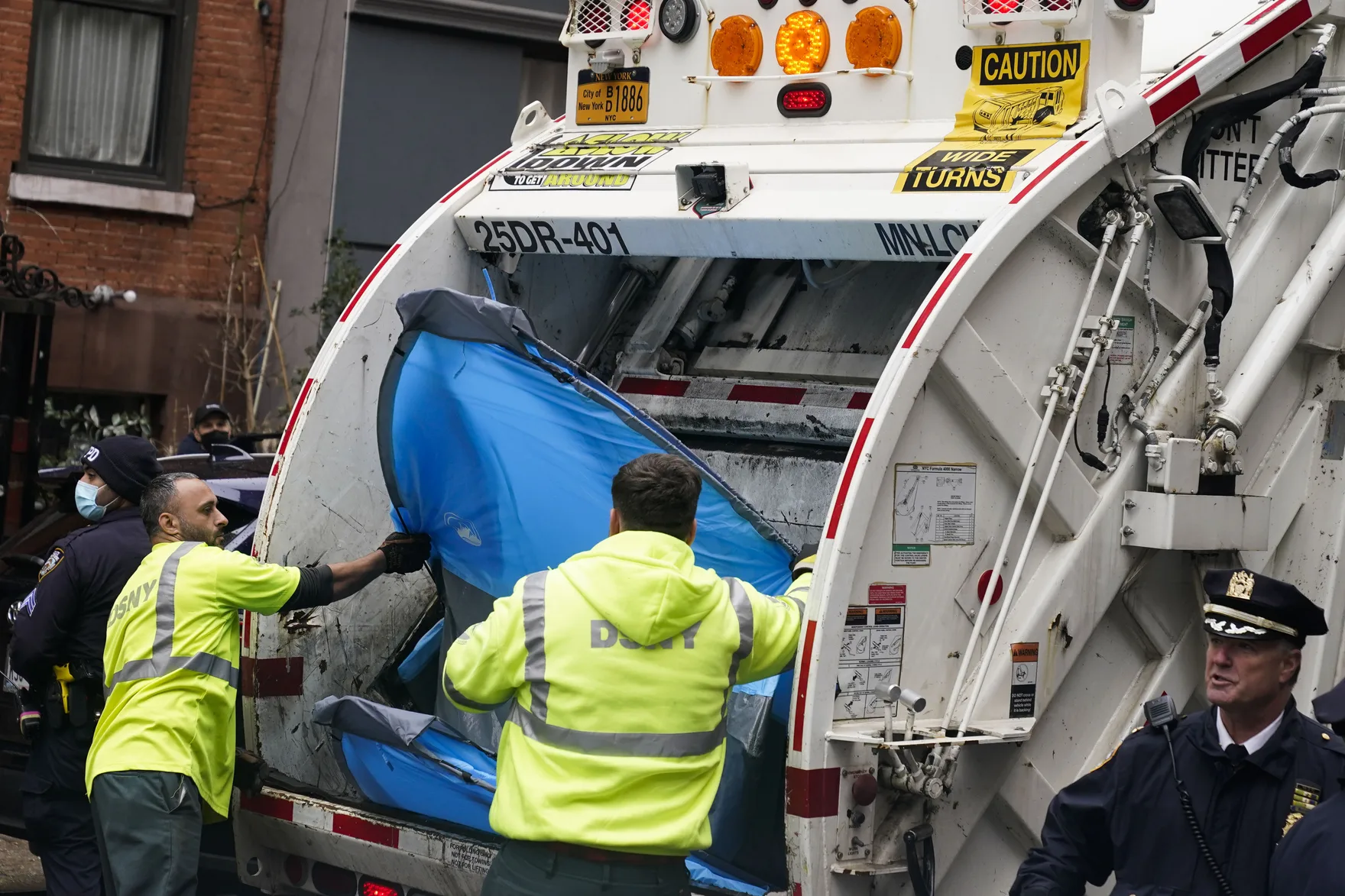
Another What-If proposal is to have the Dept. of Sanitation charge for the removal of the 98,000 tons of bulky, non-recyclable trash items, like mattresses, couches, carpets and furniture that New Yorkers throw out every year. A $20 charge for each item would raise $60 million a year, says the IBO. (It would also provide an incentive to break bulky items down for regular disposal, or to pay for private removal).
IBO analysts have noted that the work-rule change from 40 years ago that reduced the staffing of sanitation trucks from three people to two included a deal with the Uniformed
Sanitationmens’ Association to give workers a productivity bonus that amounts to about $10,000 a year. Now that two-man operation is the norm, doing away with the bonus would save the city $51 million a year. Obviously, the union would fight to keep the bonus, but the idea is worth considering.
The city’s many universities and hospitals are exempt from property taxes, and in fiscal year 2024, “these exemptions cost the City $1.5 billion — a $695 million tax expenditure for higher education and a $806 million one for hospitals,” according to the IBO. If the city worked with these institutions to negotiate PILOTS – payments in lieu of taxes – it could bring the city $165 million a year. Getting these institutions to pay up would be a politically heavy lift: behemoths like New York University, Columbia and Northwell have the kind of clout that comes from having influential donors and trustees, not to mention a small army of lobbyists and labor leaders to help make their case. But it might be a fight worth having in a city where 83,000 people are sleeping in shelters every night and leaders talk every year about possibly cutting library hours.
You get the picture. Taxes on alcohol sales in New York, which haven’t changed since 1980, are overdue for a new look. A 3% sales tax increase, plus an adjustment for inflation since 1980 and a few other tweaks could bring in $222 million a year in revenue, according to the IBO. Restoring the commuter tax, paid by non-residents who work in New York, would give us $1.2 billion a year. Extending corporate taxes to insurance companies, which are currently exempt, would mean $674 million a year.
These are intriguing ideas and big numbers that could transform New York. Many are politically all but impossible right now, but that can change. The problem is that the IBO’s good budget ideas often go ignored in the crush of bills and policies under consideration at City Hall. The vast amount of commentary and political energy the city has expended on how, when and whether to tax upper-income residents or their high-value pied-a-terre homes would be better spent considering ways to collect (or stop wasting) the billions of dollars that a unit of city government has already identified.
An amendment to the City Charter could require a set of hearings to specifically debate the pros and cons of the IBO’s What If proposals. I asked Julie Menin, the Speaker of the City Council, if she’d consider doing it.
“I like the idea,” she told me. “They give a neutral, apolitical view, which is what we want.”
New York should make it official.