



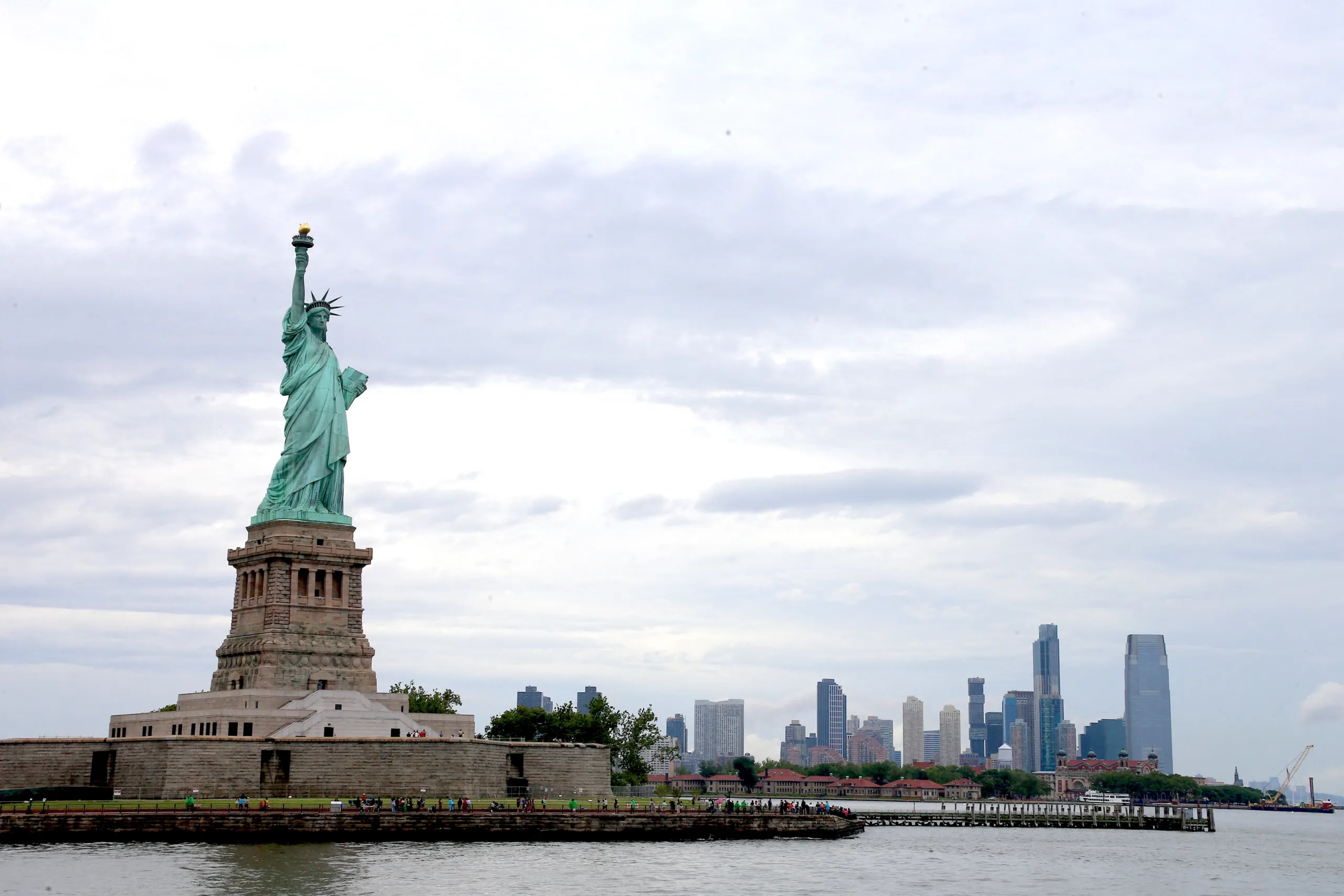
We celebrate the 250th anniversary of the Declaration of Independence this week, and most official festivities are being staged in Washington, DC—a city that did not exist when the thirteen colonies announced their intention to break from England. In 1776, the future capital was a swamp. Yet this July 4, it will host a presidential rally, a National Independence Day Parade, a Salute to America fireworks celebration, and a dramatic reading of the Declaration livestreamed on YouTube and Facebook.
But why, exactly, should Washington be the focal point of this commemoration?
The Senate has adjourned. The Supreme Court—having weakened the 1965 Voting Rights Act, allowed states to criminalize abortion, and expanded federal authority over immigrants with green cards—wisely ruled that President Trump’s executive order ending birth-right citizenship was in violation of the 14th Amendment to the Constitution. And prior to leaving for the summer, the Court also upheld a Mississippi law allowing mail-in ballots that arrive after election day – a ruling which also applies to mail-in ballots in many other states.
And the administration has challenged the free‑speech rights of journalists, attempted to impose tariffs without congressional approval, and permitted the Secretary of Defense to remove women and minorities from senior commands. Under these conditions, what draws Americans to the District of Columbia this week?
Fortunately, local communities and state governments are stepping up. Across the country, towns and cities are organizing their own concerts, parades, speeches, and fireworks. Here in New York City, tall ships from around the world will sail into the harbor and up the Hudson River. These celebrations reflect a founding principle: fear of an all‑powerful central government led the framers to write the Tenth Amendment, reserving all powers not granted to the federal government to the states or the people. The Constitution disperses authority—among three branches and across the state governments that created the federal system.
By that logic, New York City—not Washington—offers a more fitting setting to celebrate the Declaration of Independence.
A City Older Than the Nation It Helped Shape
Nearly a century before Jefferson drafted the Declaration, Governor Thomas Dongan granted New York its municipal charter in 1686. It established the city’s geographic boundaries, a common council, a mayor, and aldermen. This year marks the 340th anniversary of that charter. And unlike the U.S. Constitution, the NYC Charter vests all unassigned powers in the mayor, ensuring clear accountability for municipal services. New York’s system was designed to make someone responsible—something Washington’s fragmented governance often fails to do.
New York also embodies the pluralism the Declaration celebrates. With a population that is 38% foreign‑born, speaking more than 100 languages, the city does not empty out in summer; it comes alive. It is why Taylor Swift wants to get married in midtown Manhattan, and why thousands from every continent pack bars, sidewalks, and rooftops for World Cup watch parties. New York is not just diverse—it is vibrantly, visibly, audibly so.
A City That Works—and Works Safely
There is a reason New York is a magnet for tourists, workers, and residents. It is the safest large city in the nation. For the first six months of 2026, New York recorded the fewest murders, shootings, and shooting victims in its history. Major crime is down 6.2% across all five boroughs, reflecting sustained leadership within the New York Police Department and coordinated municipal strategies.
This is not accidental. It is the product of a city that must govern itself effectively because it cannot rely on federal agencies to animate its streets or subsidize its economy.
The Burden—and Blessing—of Not Being the Capital
For a brief period, New York served as the nation’s capital. George Washington was inaugurated here in 1789 at Federal Hall. The capital moved to Philadelphia in 1790 and then to Washington permanently in 1800. Today, New York is fortunate not to be the seat of federal power.
The federal government controls more than 25% of the land in Washington, DC. Much of it is occupied by massive, mausoleum‑like office buildings with no ground‑level retail—structures that drain street life rather than energize it. Manhattan, by contrast, has flourished precisely because it is not filled with federal agencies that have no incentive to collect rent or cultivate vibrant streetscapes. Without a federal office on every block, New York has had to innovate, adapt, and compete.
It has done so brilliantly. Over 340 years, New York has emerged as a capital of finance, fashion, publishing, and theater — in short, a capital of creativity. It attracts capital and inspires aspiration because it is governed locally, not federally. It is a place where entrepreneurs, immigrants, artists, and workers build new neighborhoods, new industries, and new futures.
A Celebration Aligned With Founding Values
Celebrating the Declaration of Independence in Washington, DC is increasingly incompatible with the cultural and political climate of the District. The Declaration asserted the right of people to rule themselves, to be free from the Crown, and to speak and think without fear. Today, Washington’s political environment — defined by institutional paralysis, partisan hostility, and constraints on expression — hardly reflect those values.
New York does. So do countless communities across the country.
We should celebrate the Declaration wherever we are—New York, California, Texas, Utah, Virginia, Alaska. But we should do so in places that embody the values that animated the founding: free speech, self‑rule, civic vitality, and pluralism. In 2026, those values are more robustly reflected in America’s cities and towns than in the federal district.
New York City doesn’t just commemorate the Declaration of Independence. It lives it.