


Society has long ingrained in us the idea that our neighbors with disabilities cannot possibly be viewed as equals — that they deserve little more than judgmental stares, patronization disguised as sympathy, or even slurs.
We pretend that’s not the case.
We speak as if we are all equals, regardless of ability.
But the first thing many of us notice when we see someone in a wheelchair or with a developmental challenge is their perceived deficiency. And in a world where actions speak louder than words, disability erasure has become an unfortunate trademark of a society designed largely for the able-bodied.
Of course, there have been major milestones in the disability rights movement, none more critical than the Americans with Disabilities Act of 1990. But even before the ADA, Queens was at the forefront of ensuring that all residents, regardless of ability, were treated with the respect they deserve.
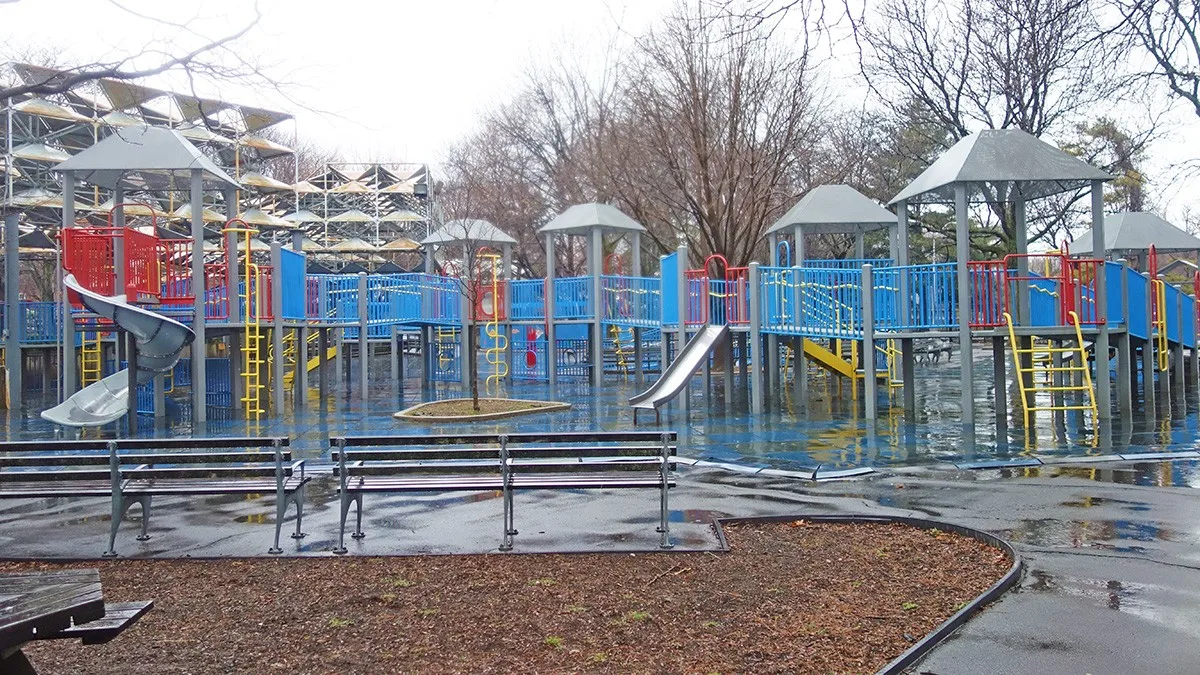
Just off 111th Street on the Corona side of Flushing Meadows Corona Park, the Playground for All Children was the first playground in the country built specifically to serve physically disabled and neurodivergent children, alongside their able-bodied peers. It opened in 1984 — six years before the ADA — and became a prototype for similar sites across New York City, the United States, and the world.
But when I toured the Playground for All Children last year, I was infuriated. The playground, once a model of true inclusivity, is now crumbling after decades of disinvestment. Its play equipment hasn’t been upgraded since it opened, nor have its amenities been refreshed. It looks the same as it did in 1984 — only now covered in rust and obvious wear and tear.
This playground should still be a place where Corona families can enjoy themselves. It should remain a space where kids in wheelchairs or walkers have the same ability to play as kids running on two feet. Blind children and those with sensory needs should have just as much to enjoy as any other child. But years of neglect have left it unsuitable for the very children it was built to serve.
That’s why I’ve allocated $17.5 million this fiscal year to restore the playground to its former glory. I wrote that check to correct decades of disinvestment and to tell every child in Queens — regardless of ability — that they matter.
But restoring one park to its former glory isn’t enough.
Like many of you, I have relatives who are physically disabled and have sensory issues. Society has long stigmatized them and ignored their needs. We can’t allow that to continue.
We need to look toward a future where all kids in every community — regardless of ability — have playgrounds and parks that meet their needs.
My one big idea is simple and should unite everyone who cares about dignity and about our green spaces: Every park, every playground, and every open space in our city where families gather should be accessible for all children. Whether you’re in Central Park, Prospect Park, or Astoria Park, there should be amenities for everyone to enjoy.
This would open up a world of opportunity for our kids. It would give them a chance to socialize with peers in their own neighborhoods. It would allow them to simply be kids. When children with disabilities and sensory issues are engaged and feel seen, it makes a world of difference in their sense of inclusion and normalcy.
That’s what my own relatives deserved — and what all our kids deserve.
During my time as Borough President, I’ve allocated $107 million to parks in Queens because I believe they are vital parts of our communities. They are where people from all walks of life find respite, and where all our kids go to have fun. And they should be as modernized as possible.
As for the Playground for All Children, it shouldn’t just stand as a monument to a moment of progress in disability rights. It should be the blueprint for how we continue advancing the rights of kids with disabilities and sensory issues in every community.
In a world that can be so brutal — where candidates who belittle the disabled are elected president and stigmas still shape society — we have the chance in New York City to show that compassion and kindness can prevail. That our human value is determined not by our ability to walk or talk, but by how we treat those around us.
We have an opportunity to fundamentally change how we perceive the disability community in New York City — as a community worthy of the same love, respect, and compassion as anyone else. Now is the time to act, before we let another 40 years pass without meaningful investment in the parks we cherish.