


Twenty‑five years ago, I went to Lower Manhattan as a paramedic after the towers fell. Like thousands of first responders—construction workers, police officers, firefighters, sanitation workers and volunteers—I went because people needed help. None of us knew then what that decision might mean for our health decades later. Now we do.
The attacks of September 11th did not end when the fires went out. For thousands of responders and survivors, they followed us home. The air around Ground Zero contained a toxic mixture of pulverized concrete, glass, metals and other hazardous materials. The same debris traveled to Fresh Kills on Staten Island, where workers spent months sifting through rubble, searching for human remains, personal belongings and evidence.
Years later, responders began developing cancers, respiratory illnesses and other serious conditions. Some never recovered. I suffered respiratory and eye injuries at Ground Zero, and now doctors are questioning whether my skin‑cancer diagnosis was related to that exposure.
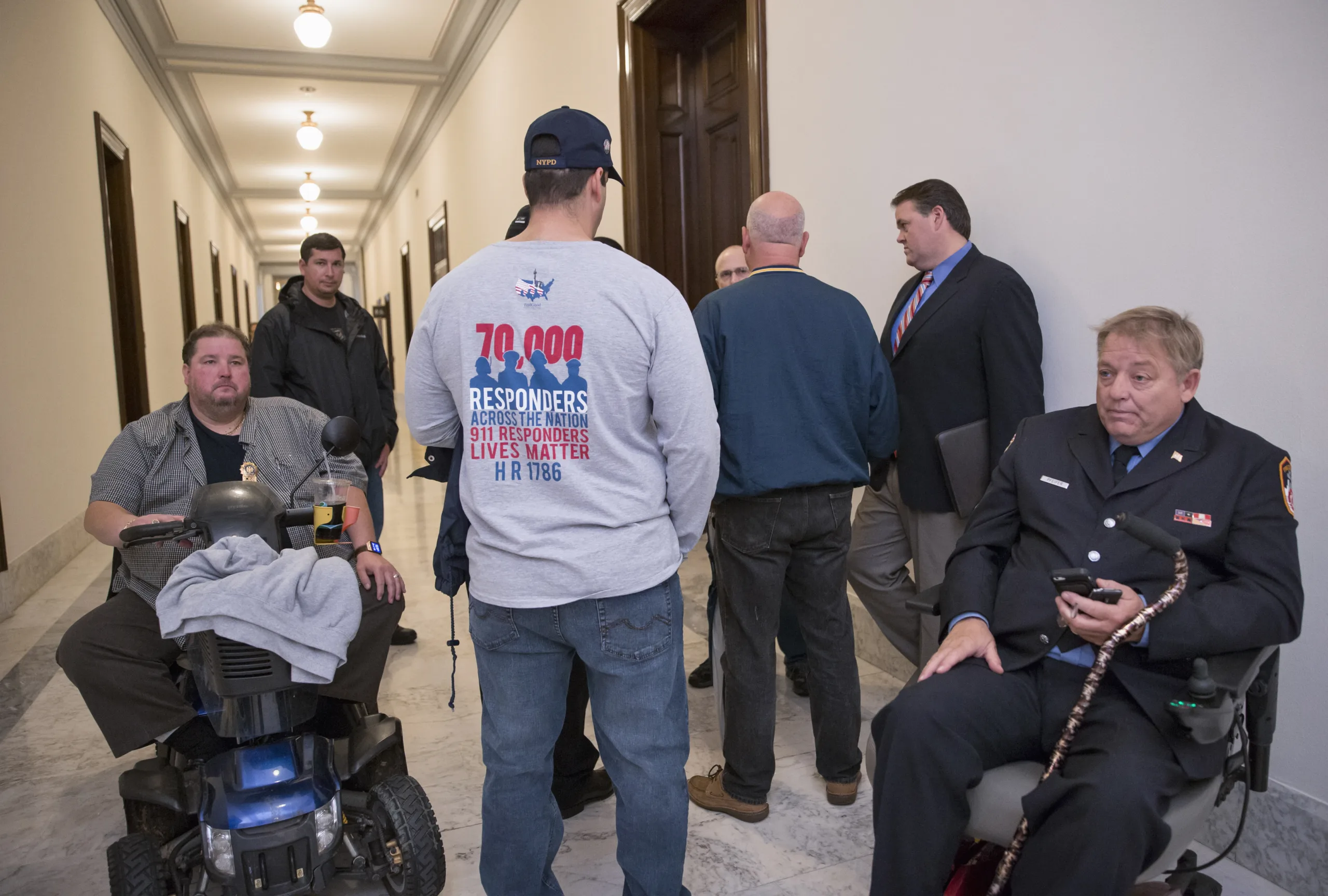
The federal government was painfully slow to recognize this reality. It took nearly a decade of organizing by sick first responders, survivors, unions, advocates and New York lawmakers before Congress passed the James Zadroga 9/11 Health and Compensation Act in 2010, establishing the World Trade Center Health Program.
Even then, the fight was not over. The program was authorized for only five years, forcing responders to return to Washington repeatedly—as if illnesses caused by toxic exposure might conveniently disappear when a federal authorization expired.
Today, the World Trade Center Health Program serves roughly 140,000 responders and survivors, providing monitoring and treatment for cancers, respiratory diseases and other certified 9/11‑related conditions. This year, after another long fight, Congress finally addressed the program’s projected funding shortfall and secured long‑term funding through 2040. That matters, and everyone who helped achieve it deserves credit.
But passing an appropriation does not mean the fight is finished.
In 2026, the program operates with roughly 83 employees—far below the 120 positions authorized. Staffing shortages have contributed to delays lasting a year or more for people waiting to have illnesses considered for coverage. Earlier this year, New York officials sounded the alarm after personnel were reportedly reassigned amid Trump‑administration staffing reductions, even as resources flowed toward immigration enforcement.
Think about what that means. We can find the personnel and money for a massive immigration crackdown. But a firefighter with cancer should wait? A paramedic with respiratory disease should navigate another backlog? A family that has already spent twenty‑five years living with the consequences of September 11th should fight Washington yet again for care Congress already promised?
That is unacceptable.
And for those of us on Staten Island, these questions are especially personal. Fresh Kills was an essential part of the recovery operation. Workers there handled World Trade Center debris for months. The FBI has documented employees who later developed cancers after working at the site. Federal occupational‑health research has concluded, in individual cases, that their exposure either caused or accelerated their disease.
Staten Islanders also live in a borough with unusually high rates of certain cancers. A city study found lung‑cancer rates on Staten Island around 30 percent higher than the rest of New York City during the period it examined. People understandably want to know why.
We should be careful about claiming answers the science has not established. The city’s study of communities near Fresh Kills found little evidence that proximity to the former landfill itself explained cancer patterns, even though some cancers were elevated and questions remain. But “we have not proved the cause” cannot become an excuse to stop asking the question. It should be a reason to keep studying it.
Twenty‑five years after September 11th, Staten Islanders deserve the best possible epidemiological research into cancer patterns, toxic exposures and the long‑term consequences of the recovery operation. And they deserve something even more basic: access to health care when they get sick.
That is why what Republicans in Washington have done to the broader health‑care system is so dangerous. Last year, Congress voted for President Trump’s reconciliation law, which makes the largest reductions in federal Medicaid spending in the program’s history. Independent estimates put the reduction at roughly $911 billion over ten years, with millions more Americans expected to become uninsured as new eligibility restrictions and financing cuts take effect.
For Staten Island families dealing with cancer, chronic illness or disability, health insurance is not an abstract line in a federal budget. It is the oncologist. It is the scan. It is the prescription. It is whether a disease is found early enough to treat.
And Washington has already shown what happens when health care becomes another partisan bargaining chip. Enhanced Affordable Care Act subsidies expired this year, pushing premiums sharply higher and causing hundreds of thousands of Americans to drop coverage.
After years of slow response to the failing health of first responders, Congress finally acted—but now risks undermining that progress with deep Medicaid cuts. And 9/11 survivors are aging into the years when the health consequences of toxic exposure become more serious.
Twenty‑five years ago, nobody at Ground Zero asked first responders to calculate whether helping another person would be too expensive. For years afterward, America called those responders heroes.
But “hero” is a cheap word if it disappears when the medical bills arrive.
The promise we made after September 11th cannot simply be that we will remember those who died. We also have an obligation to care for the people who survived—not for five years, not until the next budget fight, but for as long as it takes.
Because twenty‑five years later, September 11th is still taking lives. And we owe it to every responder, every survivor and every Staten Island family still living with unanswered questions to make sure neglect does not take any more.