


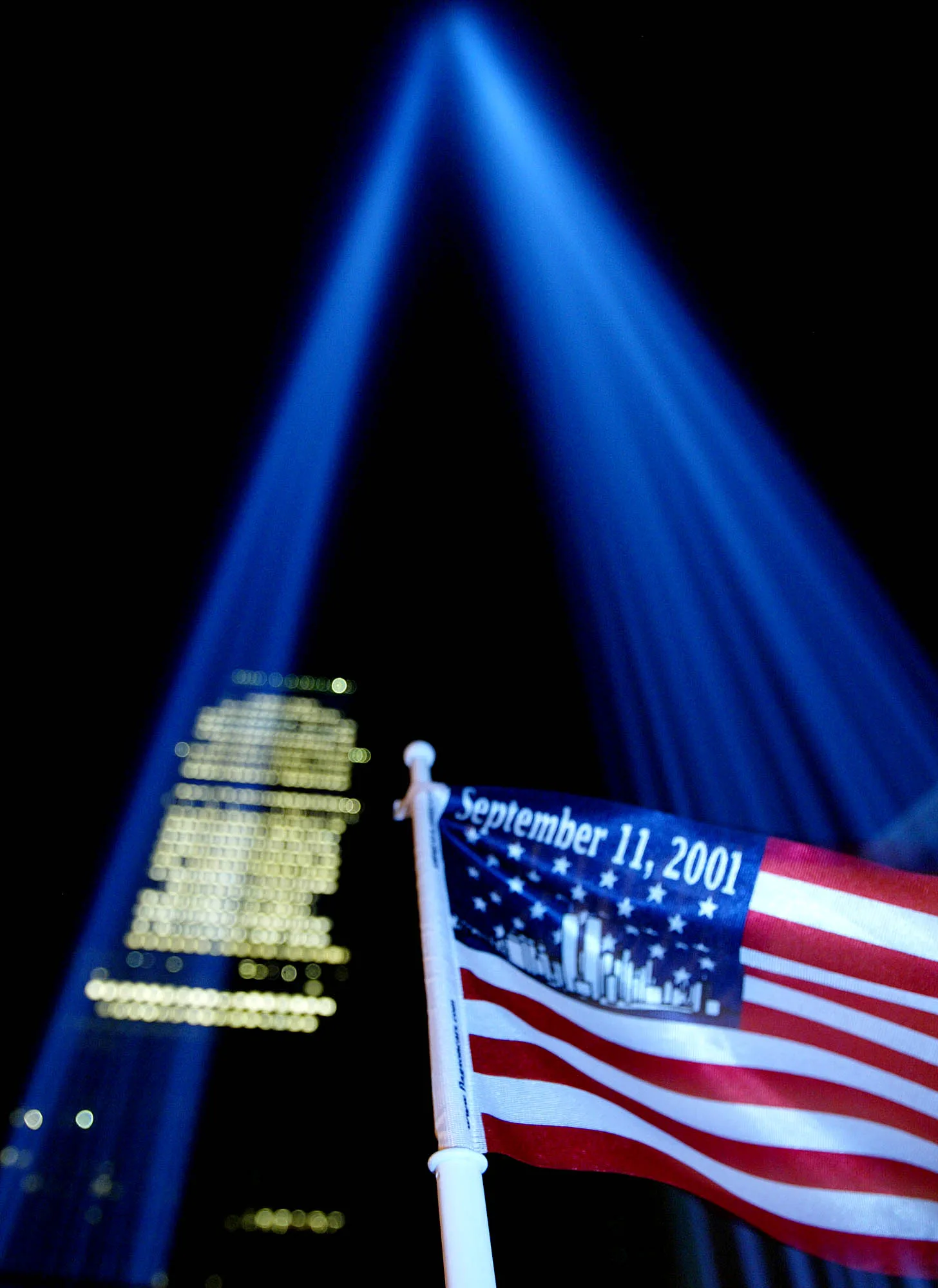
It has been a quarter century since the attacks of September 11, 2001 reshaped New York City and the nation. It is a sobering milestone, worth marking with clear eyes — about the great gains New York has made as well as the political divisions and vulnerabilities that still exist.
Like many New Yorkers, I lived through 9/11 up close. Serving as chief speechwriter for Mayor Rudy Giuliani, I stood on the steps of City Hall when the first tower fell. In the months that followed, my colleagues and I wrote eulogies for the 343 firefighters, 23 police officers, and 37 Port Authority police officers murdered at the World Trade Center. I recounted those experiences in “The Resilient City,” and I have returned to 9/11 on every anniversary since in columns and TV commentary.
The danger of 9/11 amnesia continues to loom large — the understandable impulse to turn the page and, in doing so, forget the hard-won lessons of a searing period in our history. Chief among them is the responsibility to remain vigilant, because terrorism is always one bad day away from being issue number one in America.
I do not expect the memory of 9/11, formative as it was in my life, to remain at the top of mind for my children. I pray they never have to experience anything so awful. They will, no doubt, face different challenges in their own lives and times.
In the aftermath, New York showed the resilience of a civil society under massive attack. Under Mayor Michael Bloomberg, our city kept faith with that promise, as the rebuilding of Lower Manhattan and the dedication of the 9/11 Memorial & Museum made clear. Those who believed New York would never fully recover were wrong. We rebuilt bigger and stronger than before.
The election of the city’s first Muslim mayor is controversial to some on this anniversary, but I believe that it symbolizes our city’s strength, an expression of the essential diversity of America that Al Qaeda also attacked. After all, people of every faith and many nations were murdered that day. This belief is consistent with the tone was set after the attacks by both Mayor Giuliani and President George W. Bush: we should not give in to group blame and reject the idea of a clash of civilizations, focusing instead on how humanity confronts the evil actions of individuals.
While I may have deep political disagreements with the mayor’s ideological approach to the office, the fact that New York is marking the 25th anniversary of 9/11 with a Muslim mayor who was in grade school on the Upper West Side when the towers came down is a sign of our local democracy’s maturity. It reflects the recognition that individuals must be judged on their merits if the ideal of equal opportunity is to mean anything — and that no person should be judged on the basis of group identity, especially religion – as the persistent ancient hate of antisemitism attests.
The larger danger lies in a retrospective moral equivalence that seeks to downplay or even rationalize the terrorist’s actions and ideology or uses the destabilizing decision to invade Iraq as a way of somehow justifying the attacks after the fact. The stubborn conspiracy theories around 9/11 also undercut our basic civic values. They undermine our ability to reason together from shared facts — about what was, up to that point, the most digitally documented loss of human life in history.
Then there is the danger of a lack of vigilance. On the 10th anniversary, I wrote a column detailing at least 45 foiled terrorist plots since 9/11. The danger has not gone away. But we have been more successful in strengthening our city and our country against terrorist attacks — though by no means perfect. Lone wolves continue to inflict political violence on innocent civilians and to justify their hatred in the name of faith or group struggle. That is a lie we should never accept.
But the fact is that the Trump administration has played politics with our counterterror funding. After cutting New York’s homeland security funding by $187 million last year, the president promised to restore it. Nearly a year later, as Governor Kathy Hochul said last week, $87 million remains unpaid — money that supports bomb squads, transit security and the NYPD intelligence analysts who foil attacks.
Concurrently, bioterrorism and grid risks are rising through the unregulated proliferation of AI even as key biological early-warning networks have been dismantled. The administration has also hollowed out the Cyber-Security and Infrastructure Agency, cutting roughly a third of its workforce, while reassigning nearly a quarter of FBI agents nationwide—and up to 45% in major offices—from counterterrorism to mass deportations.
These deeply unwise, politically-driven, decisions leave us more vulnerable.
We must honor those lost on September 11, 2001, but also recognize that deaths from toxic exposure have now surpassed those killed on the day itself: : more than 9,000 people, including 600 FDNY members, according to the World Trade Center Health Program. This tragic toll is ongoing – made even worse by political gamesmanship, as 9/11 paramedic Mike DeCillis poignantly shares in his adjacent essay. “Never Forget” must be more than just a slogan. Those words must be met with action on the part of our government and our people.
In the end, a quarter century on, the legacy of 9/11 is our rebuilding and the reassertion of a fundamental strength that makes New York a place where people come from around the world to achieve their American dream through hard work.
We will be stronger if we remember that courage and character are essential to any civil society. The most indelible image of that day must not be the towers coming down after an evil act of war inflicted upon civilians. It must be the first responders and everyday citizens who ran into the fire and climbed up the stairs to save their fellow citizens. That is the lesson of 9/11 we must never forget.