


September 11, 2001
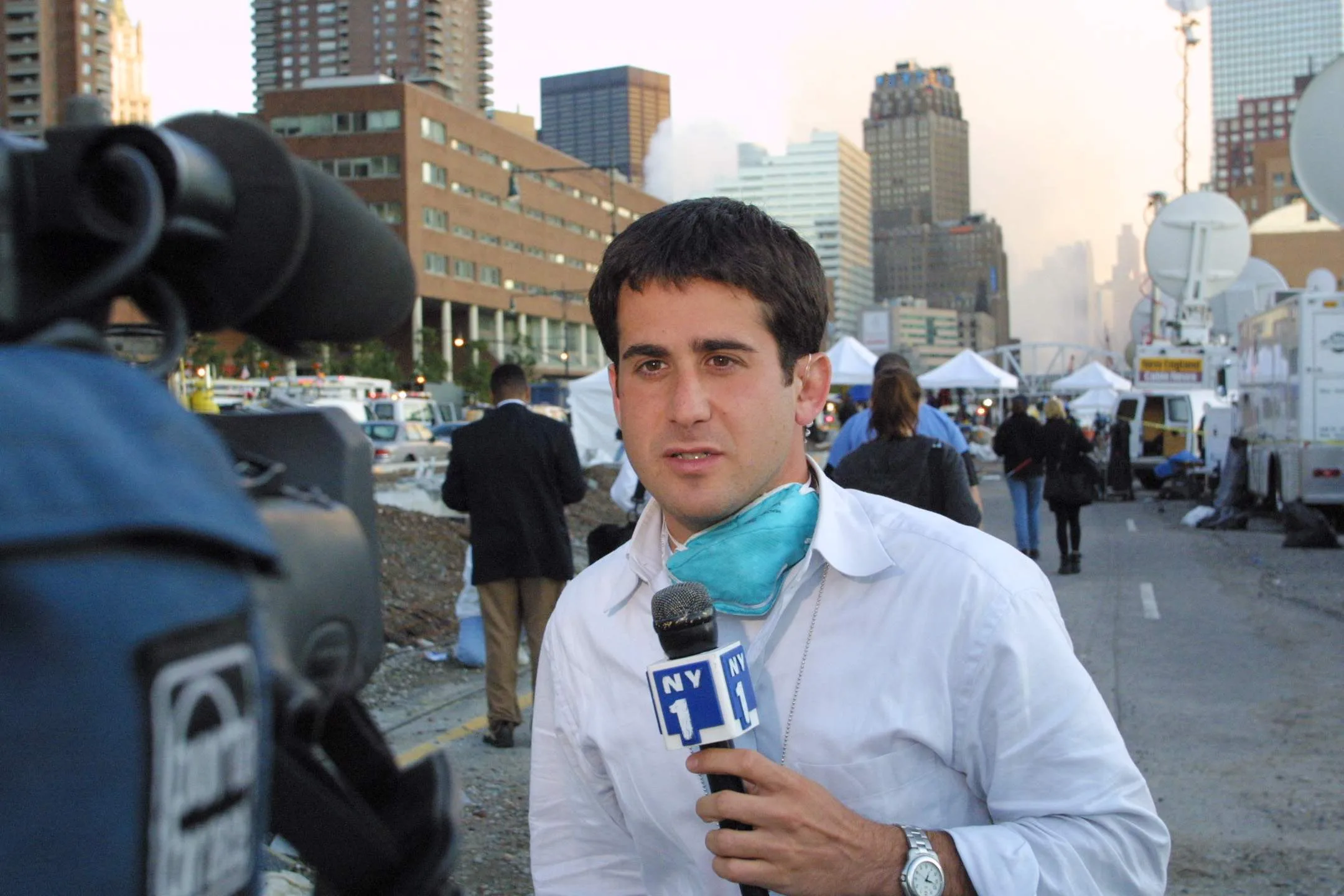
She struggled to breathe, gasping for air thickened by ash. The debris cloud from the collapsing South Tower had just chased me down West Street to the NY1 News van on Battery Place where, seconds later, dust swallowed the daylight.
I sat in darkness, stunned, when the cries of a woman pounding on the window broke the silence. I helped pull the stranger inside to safety and then, another. At that moment, I realized I was no longer a television reporter covering a story. I was an eyewitness to history—a day that would reshape my city, my career, and my life.
The morning started with routine live shots at a primary day polling site on Manhattan’s Lower East Side. After American Airlines Flight 11 struck the North Tower, we raced down the FDR Drive and directly into standstill traffic inside the Battery Park Underpass. Agitated by the passing minutes, I grabbed our camera and ran through the tunnel onto West Street, determined to reach the World Trade Center Plaza, unaware that the time spent delayed by gridlock probably saved my life.
I replayed the rest of the morning in my head for years. The plane tire near Rector Street, the tangled web of steel near Cedar, the eyewitness who calmly described the second plane’s angle of impact, the unshakable sound of the towers imploding, the pain etched on the face of FDNY Chief Daniel Nigro, the police officer who warned of an imminent gas explosion, and live shots for hours in a blanket of ash and the fog of war.
I don’t think I truly grasped the magnitude of the attacks until later in the day, after I walked more than an hour back to the newsroom. Waiting for me at my desk were dozens of unchecked voicemails that would deepen my personal connection to the tragedy. Among them, a voice from my childhood on Staten Island asking, “Have you seen Billy?”
I knew then that telling the story of September 11th with dignity and respect would be the greatest responsibility of my journalism career.
Rescue To Recovery
The next morning—and every morning for two months—I returned to Lower Manhattan before the sun rose, greeted by the unforgettable smell of burning rubble. That first week, we reported daily on rumors of an elusive pocket of life in the wreckage, but the faces of the rescue workers leaving the pit told a more truthful story.
At one point, a firefighter stopped and told me, “Everybody’s gone.”
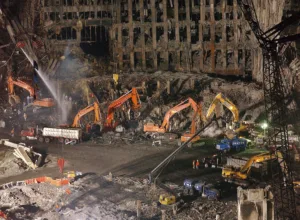
Nov. 7, 2001.(AP Photo/Stephen Chernin, File)
It didn’t take long before the focus turned from rescue to recovery, even though no one would say it out loud. The City’s Office of Emergency Management coordinated press tours of the site, politicians made the interview rounds, and the perimeter around the epicenter stabilized. Several times a day, the press received updates on how many people were killed or missing. I snapped at a veteran reporter for calling them “numbers.”
Each hour brought wild swings of emotion, a pendulum between devastation and inspiration.
Early one morning, reporting live from the West Side Highway, I experienced the very best of New York. I interviewed an exhausted steel worker who had just finished an overnight shift. He passionately vowed to return “every day until the job was done,” then casually added that he was going to pack more food because he was starving.
It was a simple, genuine moment that resonated deeply with New Yorkers who desperately wanted to help. So much so that a viewer from Tribeca soon arrived at our live truck carrying a box of sandwiches. Then, another. I reported on the gestures of goodwill, and by the end of the day, a dozen people stood on the closed highway, cheering on the recovery workers through their tears. That day, the “Thank You Mile” was born.
In the weeks that followed, elected officials started referencing a “return to normalcy,” a turn of phrase that never made sense to me—that is, until early November. Mayor Rudy Giuliani had significantly reduced the number of FDNY personnel working at the site, which had morphed into a demolition project. During a rally to protest the cutbacks, a firefighter approached and said, “Follow me. We’re storming the pit.”
Minutes later, I found myself recording exclusive video of police officers and firefighters exchanging punches, a stark reminder that emotions were still running high. The 9/11 solidarity between the FDNY and NYPD had fractured, and while it wasn’t quite a return to normalcy, in some ways, it felt like the closing of a chapter.
Rebuilding and Remembering
For the next three years, I documented the transformation of the 16-acre site as the nightly host of NY1’s primetime 9/11 show, New York Tonight. From the outset, the competing interests were clear, and the stakes were high. There would be only one opportunity to respect the lives lost and to reshape the skyline.
We held roundtable discussions where grieving families demanded the site house a memorial only, while developers spoke of replacing lost commercial space. A small but vocal crowd briefly called for the Twin Towers to return. The city’s chattering class weighed in, everyday New Yorkers called in, and elected officials promised they were listening.
The international design competition ended in February 2003 with architect Daniel Libeskind joining me to detail his winning master plan. In January 2004, Michael Arad shared his vision for the reflecting pools, and Santiago Calatrava sketched the Oculus transit hub on the back of my script during a commercial break. I was still an eyewitness to history.
25 years later, there remains no greater honor in my career than telling the stories of my fellow New Yorkers with dignity and respect. Nothing mattered more.