


Right now, somewhere in this city, ICE agents are deciding which immigrant community to target next. It may be our Haitian neighbors in East Flatbush. It may be our Chinese neighbors in Bensonhurst. It may be our Mexican neighbors in Bushwick. Wherever it may be, we know it will be a neighborhood full of New Yorkers who work hard, pay their taxes, build community, and better this city – much like the neighbors I grew up with in the Southside of Williamsburg.
When ICE arrives, they detain community members without criminal records. They detain community members who are awaiting immigration appointments, seeking legal citizenship. Regardless, ICE kidnaps them and asks questions later. City agencies may provide information to ICE or DHS to facilitate these arrests. When community members show up to protest these kidnappings and support their immigrant neighbors, it is city agencies who will clear a path for ICE.
Like many New Yorkers, I am deeply concerned about the role that the City is playing in ICE’s presence in New York City. To be the sanctuary city that we claim to be, the City needs to change the way it interacts with both ICE and those organizing to support immigrant New Yorkers.
Let’s be honest about how we got here. Under the Adams administration, a Rikers correction officer tipped off federal agents to Cristian Concepcion’s release date and tracked his bus in real time so ICE could grab him minutes later. NYPD handed federal agents the sealed arrest record of Palestinian protestor Leqaa Kordia, helping keep her in ICE detention for over a year. And 19-year-old asylum seeker Merwil Gutiérrez was swept up by NYPD and FBI agents who admitted they had the wrong person but still deported him to El Salvador’s CECOT mega-prison where he remained for four months before a prisoner swap brought him home. Under Eric Adams, when Washington D.C. asked the NYPD and DOC to help ICE take our neighbors, our city agencies said yes.
That legacy has not ended since Adams left office.
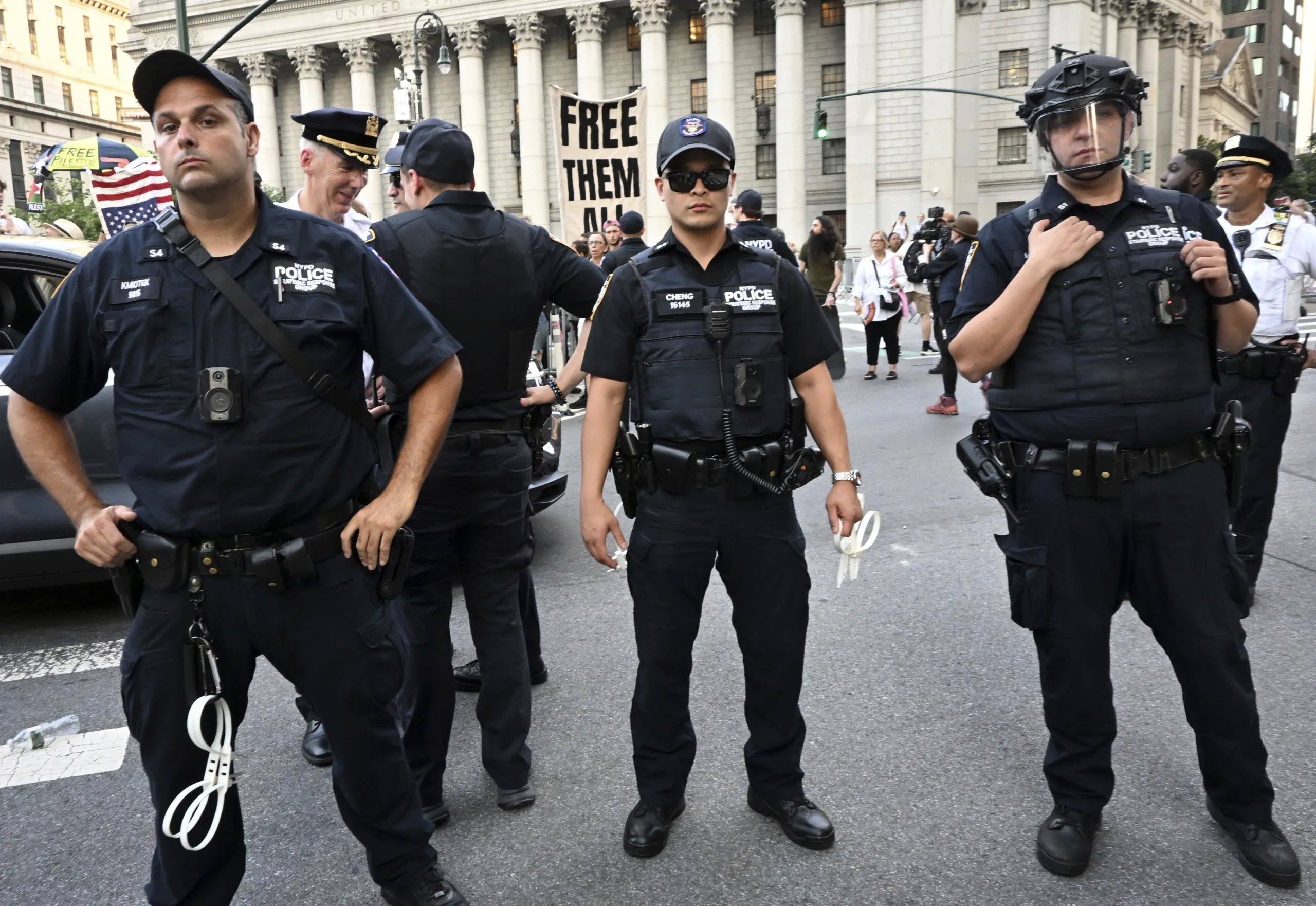
Earlier this month, NYPD officers enforced a physical barrier between protesting community members and ICE agents detaining a driver in Jackson Heights. This May, ICE agents brought a detainee to Wyckoff Heights Medical Center for treatment. Afterward, NYPD officers cleared a path for ICE agents to haul him out past protesters. In January, as the administration announced Operation Salvo and flooded the city with ICE agents under the guise of gang enforcement, standoffs broke out between protesters and NYPD officers accused of running interference for ICE agents making arrests.
New York City is a sanctuary city. That isan established legal boundary: the NYPD and the Department of Correction cannot ask anyone about their immigration status, cannot hold a person in custody simply because ICE asks them to, and cannot pass along information that would help federal agents pursue civil immigration enforcement, except in a limited set of cases involving convictions for roughly 170 offenses the law defines as “violent or serious.” ICE is also prohibited from arresting immigrants at courthouses or state government facilities.
ICE is detaining New Yorkers in record numbers. According to data from the New York City Area of Responsibility, which covers the five boroughs, Long Island, and parts of the Hudson River Valley, ICE arrested 462 people in the first quarter of 2025, and more than 1,200 people in just the first eight weeks of 2026. But far fewer of those recent arrests are actually resulting in deportation: only 195 arrests in 2026 led to deportation, compared to 342 in the same period the year before—a 16% deportation rate in 2026 versus 74% in 2025. That’s not a coincidence; it tracks with who’s actually being picked up. The share of those arrested who actually had a criminal conviction fell from 27% to 21.5% over roughly that same period. ICE is arresting and detaining more than twice as many people, deporting a fraction of them, and increasingly targeting people with no criminal record to justify the arrest in the first place.
These causeless arrests are happening on specific streets, in specific buildings, facilitated by specific city employees. On the ground, ICE agents have been spotted across Inwood, College Point, Bushwick, Ridgewood, East Elmhurst, Elmhurst, Corona, Jackson Heights, and parts of Staten Island. And ICE surveillance is reaching into places that used to be off-limits: in June, Sunset Park teachers and advocates petitioned the city after agents were repeatedly seen parked outside schools, activity that began after DHS rescinded the decades-old policy that had kept immigration agents away from “sensitive” areas like hospitals, schools, and churches. At a time when this city needs to stand together to protect our neighbors from what is often unlawful, xenophobic kidnapping and detention, New Yorkers are being betrayed by the agencies bound by law to protect them.
Sanctuary city laws exist for a reason: to ensure that a person’s immigration status does not determine whether they can safely report a crime, send their children to school, or seek medical care without fear that a routine interaction with the government will end in kidnapping. Those laws mean nothing if city agencies can violate them without oversight or consequence.
Mayor Mamdani inherited this broken system. He also signed Executive Order 13, barring ICE from city property without a judicial warrant and ordering new agency audits, and said publicly that NYPD shouldn’t be coordinating with ICE. There’s real cause for hope beyond City Hall, too: Governor Hochul’s Local Cops, Local Crimes Act, which bars local police from formally signing on to do ICE’s enforcement work for them and blocks the city from paying to build or run immigration detention facilities, took effect this month. That’s progress, but the job isn’t done. Here’s what needs to happen next:
First, a full, independent audit of every city agency’s data-sharing practices with ICE—DOC, NYPD, and beyond. New Yorkers deserve to know whether their government agencies are undermining protections passed by their own City Council.
Second, real enforcement of the sanctuary city statutes already on the books—including the aforementioned Local Cops, Local Crimes Act. The City should be working closely with Gov. Hochul and the Attorney General’s office to actively monitor and report violations by local law enforcement, and that starts with a record of every request ICE makes to a city agency.
Third, expanded funding for the NYC ICE Hotline, know-your-rights training, and rapid-response legal networks in the neighborhoods bearing the brunt of this surge. Our neighbors should not have to rely on informal community networks to track where agents are operating; the city should be resourcing that infrastructure directly.
Across this city, people are living in fear—people that came here the same way generations before them did, seeking work, safety, and a chance to build a new life by creating families and community. For decades, this city promised to protect those families, even when the federal government turned its back on them. Eric Adams broke that promise. Mayor Mamdani doesn’t have to.
We call ourselves a sanctuary. Now we have an opportunity to really be one.