



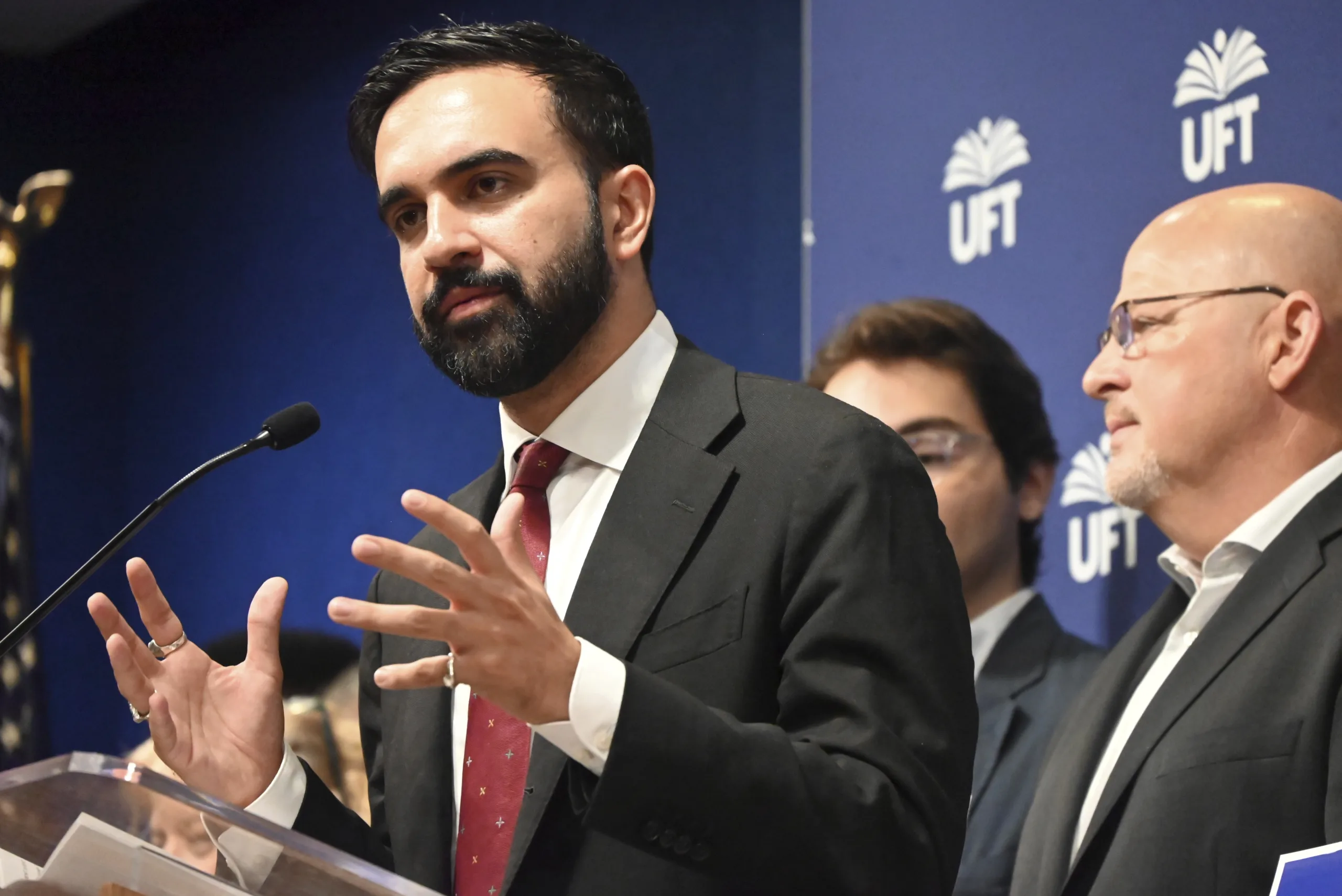
Mayor Zohran Mamdani, hours after taking office, set a high bar for his administration as he moved to expand the role of city government in New Yorkers’ lives. Residents “expect greatness” from people who work in the private sector, Mamdani said, “while accepting mediocrity from those who serve the public.”
“Let us demand the same from those who work in government.”
That’s a praiseworthy goal, and Mamdani has good reason to aim high. His budget this year was balanced by leaning heavily on one-time changes approved by Albany. Even with that help, he’s looking at a $6 billion gap in the fiscal 2027 budget he needs to craft early next year. Before adding or expanding programs, Mamdani must stretch city dollars further. The stage is set for a once-in-a-generation reset in how the city is served by its workforce.
The mayor heads up the largest workforce in New York, with upwards of 300,000 employees whose compensation accounts for almost half of the city’s budget. More than 90 percent of these workers are covered by a union contract.
Mamdani’s Office of Labor Relations is and will be sitting across the table from each of the city’s unions to update these deals over the next few years. His negotiators will need to press in two key directions: shielding taxpayers from exploding benefit costs while getting city residents a better return on their spending—shedding the contractual obstacles to what Mamdani has called “public excellence.”
Even compared with other public employers, New York City stands apart in key respects, and Mamdani needs to explain this to the public. City employees currently aren’t required to pay for their health insurance. New York state agency workers, by comparison, pay at least 12 percent toward individual coverage and up to 31 percent for dependents. City taxpayers have been absorbing the entirety of recent health-care cost increases. At a minimum, Mamdani should press for new hires and the highest-paid employees to contribute at the same rate as their counterparts employed by Albany.
Meanwhile, the city pays more than $1 billion annually into union-managed “welfare funds” meant to provide dental, vision and other benefits for current workers and retirees. Former Comptroller Brad Lander all but stopped conducting oversight reviews of these funds, even after a trio of union officers became guests of the federal government for swiping money from one of the funds. Instead of turning over cash to dozens of union funds, the city could cut out the middlemen and administer benefits directly. That would allow it to achieve greater economies of scale and avoid further embezzlement and abuse—though it would trim the number of patronage jobs union executives can hand out.
This is without getting into the fact that union contracts are about far more than pay and benefits. They dictate employee work rules ranging from how overtime gets assigned to when services can be delivered. Collective bargaining was grafted on top of the city’s existing civil-service system, meaning unions regularly have turf fights over which union should do what work. To make matters worse, they instinctively resist innovation. For instance, even as single-operator garbage trucks serve neighborhoods in the suburbs, the city’s sanitation-worker union doesn’t want to see the end of two-person crews.
Mamdani could help his commissioners greatly by highlighting the biggest contract-imposed, often anachronistic obstacles they face—and explaining why city services will be better if the mayor can get them changed. Look behind any dysfunctional feature in New York City public services, and you’re apt to find a union’s acronym.
Under normal circumstances, this sort of public campaign would be a declaration of war, but Mamdani already finds himself in one. The United Federation of Teachers, the city teachers union, cajoled the City Council into end-running him and approving pay hikes for paraprofessionals outside the collective-bargaining process. The mayor, appropriately, has sued to block the move, but he’s still being careful to avoid an open confrontation. Other city employee unions are watching eagerly to see if they, too, can settle a contract with the mayor and then ask the Council for a second helping from the public fisc. Last month, the Council sought to dismiss the suit.
First and foremost, Mamdani must ask himself: Is the public interest better served if the city is being run by its mayor or its unions? “Public excellence” will remain elusive until Mamdani confronts the structural problems that ground it out of so many city buildings long ago.