


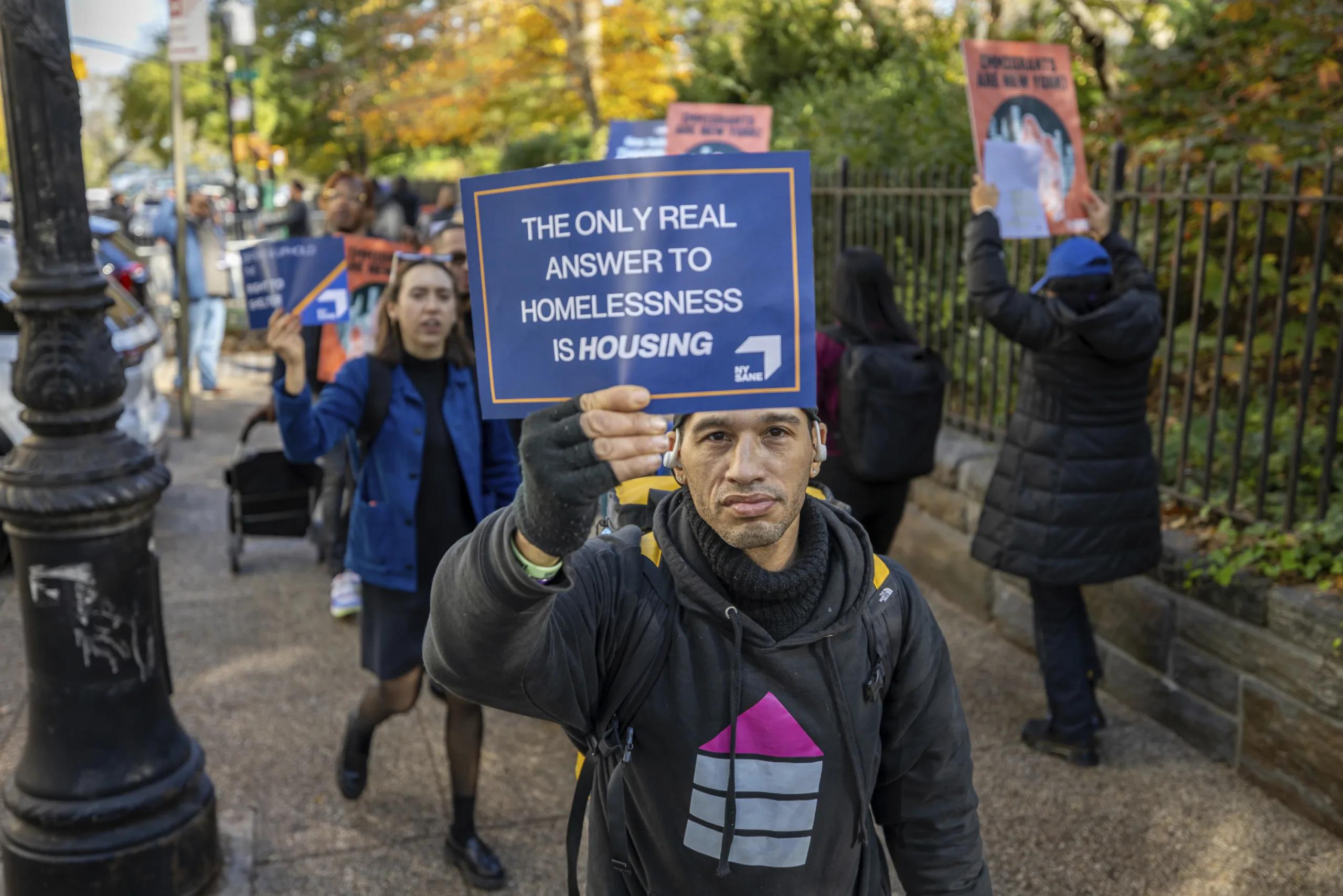
Last night, more than 52,000 mothers, fathers, and children went to bed in a New York City shelter. The wealthiest city in the world is in the throes of a family homelessness crisis.
These families aren’t any different from yours or mine. They’re the mother next to you on the subway. Your kid’s best friend from school. Your coworker. They’re New Yorkers with dreams and aspirations that are too often pushed to the margins. They are the forgotten face of homelessness.
The good news? We’re making real strides to end this epidemic. In June, the City agreed on a budget that expands eligibility and makes a historic investment in housing vouchers – one of the most powerful tools we have to move families out of shelter and into permanent housing – after Win and our allies in the City Council made it a sticking point in this year’s negotiations. And in May, after years of bureaucratic red tape complicating the process for families looking to access affordable housing, the Mamdani Administration announced its support for a series of administrative reforms that will get families out of shelter faster.
But we’re far from out of the woods. Subsidies and streamlined government processes alone won’t solve this crisis. Ending family homelessness requires supporting all shelter providers in adopting a model that holistically helps families on their path to permanent housing. That means going beyond placement and ensuring families receive the trauma‑informed support they need to thrive.
Win offers the blueprint.
We’ve pioneered a model that brings wraparound services to homeless families, helping them secure permanent housing — and stay housed. Our approach gives parents the tools to achieve financial stability, supports children academically and socially, and treats homelessness as the trauma it is.
These goals may sound ambitious, but they’re achievable. Here’s how.
A trauma‑informed foundation guides all our work. Each shelter is staffed with a clinical director who ensures families receive appropriate support. Every staff member — from security to case managers — is trained in crisis prevention, de‑escalation, and basic mental health support. By meeting families where they are, we help them build lasting stability.
That foundation allows us to focus on financial security, so families can leave shelter confident they won’t return. Our Income Building Program brings hands‑on skills training directly to shelters, helping heads of household secure stable, good‑paying jobs. Residents receive interview prep, computer literacy training, and job placement assistance through strong corporate partnerships. And because parents can only work when they know their children are safe, we provide free childcare in our shelters, giving moms and dads the chance to earn a steady income.
The results speak for themselves. On average, residents who complete our program increase their annual wages by $3,000. Last year alone, more than 900 moms gained or improved their employment status. For a parent transitioning out of shelter, this is more than a paycheck — it’s peace of mind, stability, and confidence.
But supporting parents is only half the battle. Childhood homelessness is a leading indicator of adult homelessness. Kids in shelter also face a persistent achievement gap: only 27% of students in grades 3–8 living in shelter are proficient in English language arts and math — less than half the rate of their housed peers.
So we’re taking action. During school breaks, we offer Camp Win, a daily STEAM program designed to prevent learning loss for every child in our shelters. During the school year, we provide tutoring to give students the extra support they need. Already, 83% of students in our tutoring program are showing meaningful academic improvement. Over the last five years, we’ve sent 186 students from our shelters to college, helping them build stable futures of their own.
This work pays off. Last year, we helped nearly 4,000 moms and kids move from shelter to permanent housing — and 94% remained stably housed one year later. We’re breaking the cycle of homelessness.
But while our model works, it’s far from the norm across the city’s family shelters. That must change.
Most family shelters are run by nonprofits like Win, but many lack the resources to provide truly comprehensive support. The City should invest in the financial and infrastructural capacity needed to build robust wraparound services — from income building to youth development to free childcare.
Some may argue these supports are costly or unnecessary. But every family moved out of shelter — and kept out — saves the City money. Housing a family in shelter costs nearly $100,000 annually. It’s in our collective interest not just to house families, but to break the cycle of homelessness. By investing in comprehensive support, we can.
We’re making progress, but there’s more work ahead. By bringing holistic services to shelters across the city, we can make a lasting difference. We can shine a light on the forgotten face of homelessness and end this crisis once and for all.
We have the tools. Families have the determination. Win has the playbook.
Together, let’s end family homelessness so no child has to grow up in a shelter.