



As deputy mayor for communications under Eric Adams, I saw firsthand how difficult it is to build housing in New York City. Even when the need is obvious, projects drag on for years, outdated rules stand in the way of new homes, and the city cannot get the job done without Albany’s help.
That is why the relationship between Mayor Adams and Governor Kathy Hochul mattered so much over the four years they served together. We called our administration the “Most Pro-Housing Administration in City History,” and for good reason: the city broke records for affordable housing production, pursued sweeping zoning reforms, and advanced hundreds of thousands of homes through construction, preservation, and planning. Much of that momentum came from having a partner in Albany who understood that solving New York’s housing crisis required seamless alignment.
I know Governor Hochul from well before my time in City Hall. I served as her communications director during her congressional special election and her first year in Congress. Having worked with her in both roles, I know that delivering results requires more than announcing ambitious goals—it requires leaders willing to navigate tough negotiations and make consequential decisions when the outcome is uncertain.
Few examples illustrate that better than the “City of Yes for Housing Opportunity”—the most pro-housing zoning proposal in our city’s history. In November 2024, the proposal was approaching a critical City Council vote. The city had identified $4 billion in investments, but councilmembers were holding firm on a $5 billion package. Without an agreement, passage of this historic legislation was in jeopardy.
Our team had been keeping Albany apprised of the negotiations, but things were at a standstill. After midnight, on the morning of the Land Use Committee vote, a senior member of our team reached out to a counterpart in the governor’s office to ask the state for the remaining $1 billion—a substantial request on a compressed timeline.
Within a few hours, we had our answer: Governor Hochul committed the $1 billion in state support. She called the mayor to confirm the commitment, enabling the proposal to clear the committee that day before full Council approval on December 5.
This was partnership in action: a mayor making an urgent request, a governor recognizing what was at stake, and two administrations working through the night to seal the deal.
Could anyone have imagined that happening when Andrew Cuomo was governor and Bill de Blasio was mayor? That relationship was often defined by conflict. By contrast, Governor Hochul and Mayor Adams built a working dynamic that turned ambitious ideas into concrete results. City of Yes—a plan projected to enable 80,000 new homes over 15 years alongside $5 billion for housing and infrastructure—was the clearest example of what that cooperation could yield.
The scale of this reform is remarkable. City of Yes alone will enable more housing than rezonings under any mayoral administration in the previous 50 years—including the 12 years of Michael Bloomberg and eight years of Bill de Blasio combined. It shows both how severely New York had constrained its own growth and how much smart policy can achieve.
That alignment extended far beyond one vote. In 2024, Governor Hochul worked with the Legislature and city leaders to enact a statewide housing package featuring a new tax incentive for residential construction, measures to spur office conversions, and the repeal of a decades-old cap on residential density.
Meanwhile, the Adams administration advanced five neighborhood rezonings expected to yield nearly 50,000 homes, unlocked city-owned land, and committed a record $26 billion in capital funding. By the end of Fiscal Year 2025, the city had produced nearly 86,000 affordable homes through its housing agencies, marking the strongest three-year stretch of affordable housing production in city history.
Some of the most vital work received less public attention. The city and state collaborated to preserve existing housing, utilizing the Public Housing Preservation Trust to modernize 25,000 NYCHA apartments and leveraging the Permanent Affordability Commitment Together (PACT) program to unlock billions in capital repairs.
Governor Hochul also recognized that the crisis extends beyond the five boroughs. For generations, families priced out of the city have moved to the suburbs. When surrounding communities fail to build homes, the whole region suffers. Her Pro-Housing Communities Program, which ties state funding to local growth policies, ensures more municipalities share the responsibility of expanding supply.
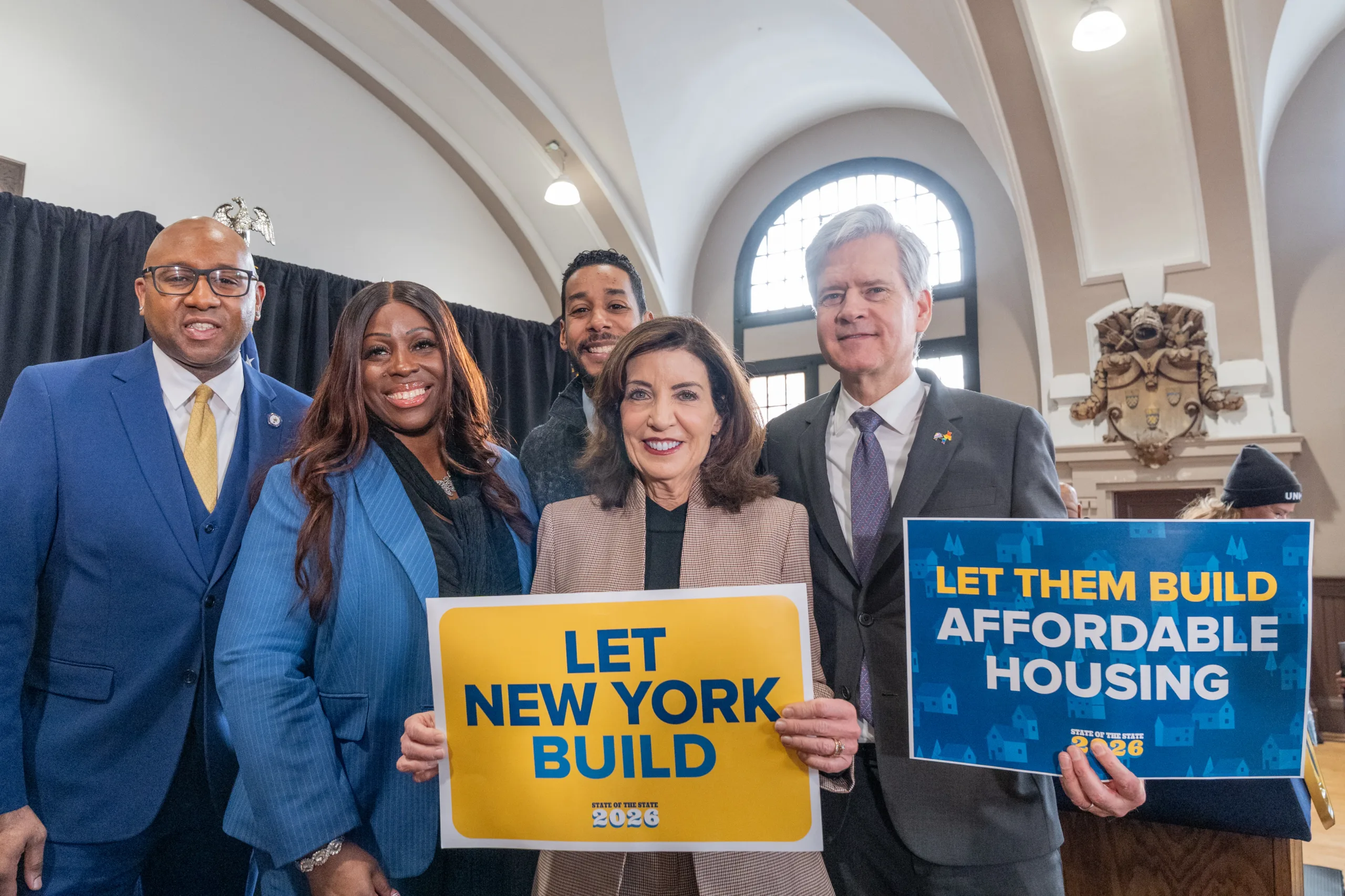
None of this means the work is complete. New Yorkers still face sky-high rents, homeownership remains out of reach for many, and projects continue to contend with lengthy reviews, unpredictable costs, and regulatory friction. Governor Hochul’s environmental review reforms under her “Let Them Build” agenda correctly target these bottlenecks.
The next phase must focus on lowering construction costs, eliminating delays, and embracing new technologies to build more efficiently. Policymakers must also balance tenant protections with the financial reality facing property owners. When building owners cannot cover basic maintenance expenses, apartments deteriorate, buildings fall into distress, and New York risks losing housing it cannot afford to forfeit.
New York’s housing crisis is too massive for any single leader or government entity to solve alone. The progress achieved during the Adams administration with Governor Hochul’s backing proves the power of a state government willing to stand alongside the city, back shared goals with capital, and strip away barriers to growth.
The next chapter will demand that same spirit of cooperation—and an even greater sense of urgency. New Yorkers do not need competing press announcements; they need more homes, lower barriers to building, and leaders who deliver together.