


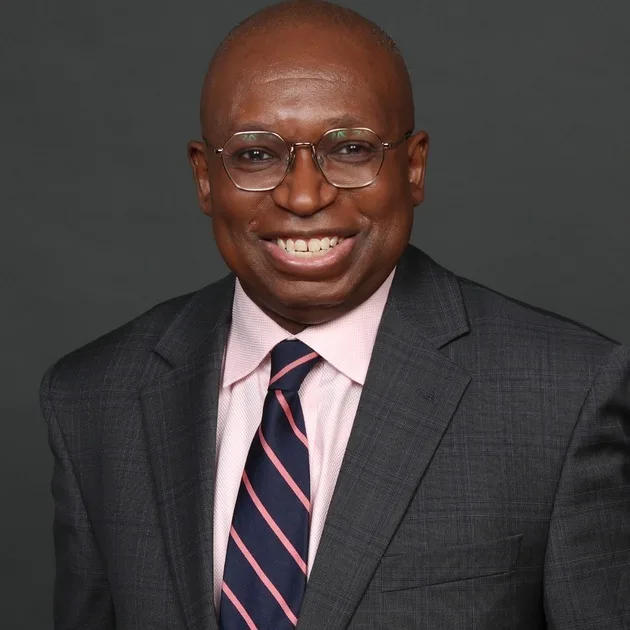
Editor’s Note: This week, Columbia University’s Anya M. Schiffrin previewed a forthcoming report from Columbia Journalism School’s Tow Center for Digital Journalism and the Initiative for Policy Dialogue. It tracks the rise of social media influencers in distributing City Hall and city agency information to the public. Ironically, in mapping this new media ecosystem, Schiffrin’s article itself went viral, landing a New York Post front page. Professor Schiffrin sat down with us to discuss the report, the brave new world of influencer communications, and whether the public should be worried about how information is being conveyed.

—————————————————————————————————————————————————————————————————————————-

Searchlight: Let’s start at the beginning. When most people hear “influencers,” they think TikTok or Kardashians. What are we talking about in the context of what’s coming out of City Hall and city agencies?
AS: I’ve spent about 25 years studying media and the information ecosystem — what helps quality information reach people, and what gets in the way. Governments have always grappled with how to communicate with citizens. During the Spanish Flu, that meant newspaper ads and flyers. In Mexico City, it meant handing out leaflets about handwashing and then tracking hospital admissions to see if it worked.
That’s the lineage I see in what the Mamdani administration and city agencies are doing now: using content creators to reach specific communities with information about city programs and services. The people I interviewed were often targeting very particular audiences — someone focused on the Bronx, another reaching Black men specifically. The city’s Campaign Finance Board was also using influencers to figure out which neighborhoods weren’t getting enough election information and weren’t turning out to vote. Most interesting: These aren’t necessarily big-name influencers; some are micro-influencers with modest followings, but they reach a specific demographic effectively.
Searchlight: This seems to trace back to the pandemic — under de Blasio, or maybe earlier — when the city needed ways to reach people other than face- to- face.
AS: I can’t say definitively when it started, as there hasn’t been much research on this. The most comprehensive paper I found covered Health + Hospitals working with influencers during COVID — first for testing, then for vaccines.
Searchlight: Is this essentially a modern version of the PSA?
AS: In a way — though the term has drifted. PSA used to mean a government public service announcement. Now content creators slap “PSA” onto almost anything to signal “this is important.”
Searchlight: So, “hashtagPSA”?
AS: Well, yes, the term has evolved, even as the underlying function — get important information out — has stayed similar.
Searchlight: If many of these influencers are being paid, is there really much distinction between them and the government itself?
AS: I don’t think so, and there are actually two distinct tracks here. First, there are influencers under contract: the city gives money to marketing agencies, which subcontract influencers under specific guidelines — campaign messages, deliverables, engagement metrics. Second, there’s a press list — influencers on Signal who get news and updates and can choose to cover them or not. I don’t know why that group’s existence wasn’t made public, but as far as I know, those people aren’t paid; they just receive updates. This touches on what we academics call “boundary work” — what separates journalists from everyone else. These influencers are journalist-like in that they convey information, but they’re not journalists in other important ways. It’s something to study further.
Searchlight: We’ve seen this play out at press events: The mayor does an announcement, with the usual press pool present, but also a younger cohort who seem more sympathetic to the mayor and aren’t traditional press. Is there a blurring of roles happening?
AS: Absolutely. Twenty years ago, I wrote about journalists in Africa who earned so little that they took on side-consulting work, which then compromised their day-job coverage. I see a similar dynamic here: these creators wear many hats — commercial work, product placement, a city contract, and a spot on that press list, all at once. That blurring isn’t optimal and carries real risk. A professional journalist works for one outlet with clear rules. When you’re playing several roles simultaneously, it gets murkier. The U.S. has never licensed journalists the way some countries do, so there’s no formal credential to lean on. But our research found labeling on these posts was inconsistent. Clearer labels and more disclosure would go a long way.
Searchlight: Take this outside the New York context — the Trump White House has leaned into the fact that there’s no official press credentialing system, pushing out legacy media in favor of newer, more explicitly partisan voices. Could that same dynamic show up locally?
AS: Yes, that’s right. There’s real concern about influencer content becoming politicized or a vector for disinformation. I’m hoping our paper sheds light on what’s happening and offers constructive suggestions on labeling and disclosure.
Searchlight: There’s also been a mini scandal involving the Pentagon hiring (without disclosing) conservative influencers, so this concern isn’t unique to New York — especially with a young, media-savvy mayor. On transparency: the mayor’s office contracts with a PR firm, which subcontracts influencers. You might see a budget line for a specific firm, but not know which individual creators are involved. Does that need more transparency?
AS: Yes — there are real questions about where disclosure should happen. Spain requires “paid partnership” labeling directly on the video itself, visible throughout — not vague terms like “partner” or “collab.” Something like that, or “city paid partnership,” would make things clear. On budget transparency, I haven’t seen an actual agency contract, so I can’t speak to how they’re structured. My students and I tried to dig into the city budget on this and found it unclear. I found some information but couldn’t stand fully behind it after fact-checking, so that’s an area that warrants further study.
Searchlight: Do you have a sense of whether any influencers are getting preferential access to city government, or advance information the public doesn’t have?
AS: Not that I know of. But it’s the kind of thing people naturally worry about, the same way they worry about access journalism among traditional journalists.
Searchlight: Setting the academic hat aside — is this a positive development for public information, or something to be wary of?
AS: Honestly, it really doesn’t matter what I think; this is the direction things are heading regardless. There are real upsides, but it has to be handled carefully. I’m a native New Yorker, and I’d love to see the city set the standard for disclosure, transparency, and codes of conduct. Europe, California, and Texas are already working on this, and I’d like New York at the front of that conversation.
Searchlight: As a journalist myself, there’s an instinct to see this as a threat — but one could also call it a democratization of the information ecosystem.
AS: We said the same thing about the early internet — that it would be the great equalizer. It wasn’t; in many ways it made things worse. So I don’t want to be too optimistic. But this is a real chance to set standards while the space is still forming.
Searchlight: Would you recommend City Council or Albany Legislature hearings on this?
AS: I do think we need new standards, codes of conduct, and open discussion. I hope the paper acts as a catalyst. Other places — including several European countries — have already had these conversations and built regulations. I don’t think we should brush this under the rug.
Searchlight: What are examples of what European countries are doing?
AS: The core EU principle is transparency — clear disclosure for paid content. France and the Netherlands have gone further, with self-regulatory bodies offering certification for influencers. I’d love to see the Mamdani administration run training sessions so both agency staff and influencers understand the rules clearly. The FTC and the EU both have solid public guidance on disclosure requirements; New York doing the same would be a good step.
Searchlight: Professor Schiffrin, thank you so much for your time.