


Asthma has been a persistent and stubborn public health challenge in the Bronx, with Black and Brown communities carrying a disproportionate share of the burden. More than half of Bronx residents diagnosed with asthma are Black and Brown. These disparities are not a coincidence but instead are a consequence of decades of neglect and disinvestment that have left many Bronx communities facing greater environmental hazards, poor housing conditions, and barriers to quality health care.
That is why The Bronx needs a dedicated, comprehensive asthma center and why New York City and New York State must make its development and long-term funding a priority. The need is especially urgent because asthma in the Bronx cannot be separated from the environment in which people live. In high-poverty neighborhoods, families are more likely to live in housing with mold, pests, dust, poor ventilation, and other asthma triggers. Four of The Bronx’s twelve community districts have poverty rates of 30 percent or higher. Children ages 5-17 living in high-poverty Bronx neighborhoods experience asthma-related emergency-department visit rates more than six times those in low-poverty neighborhoods.
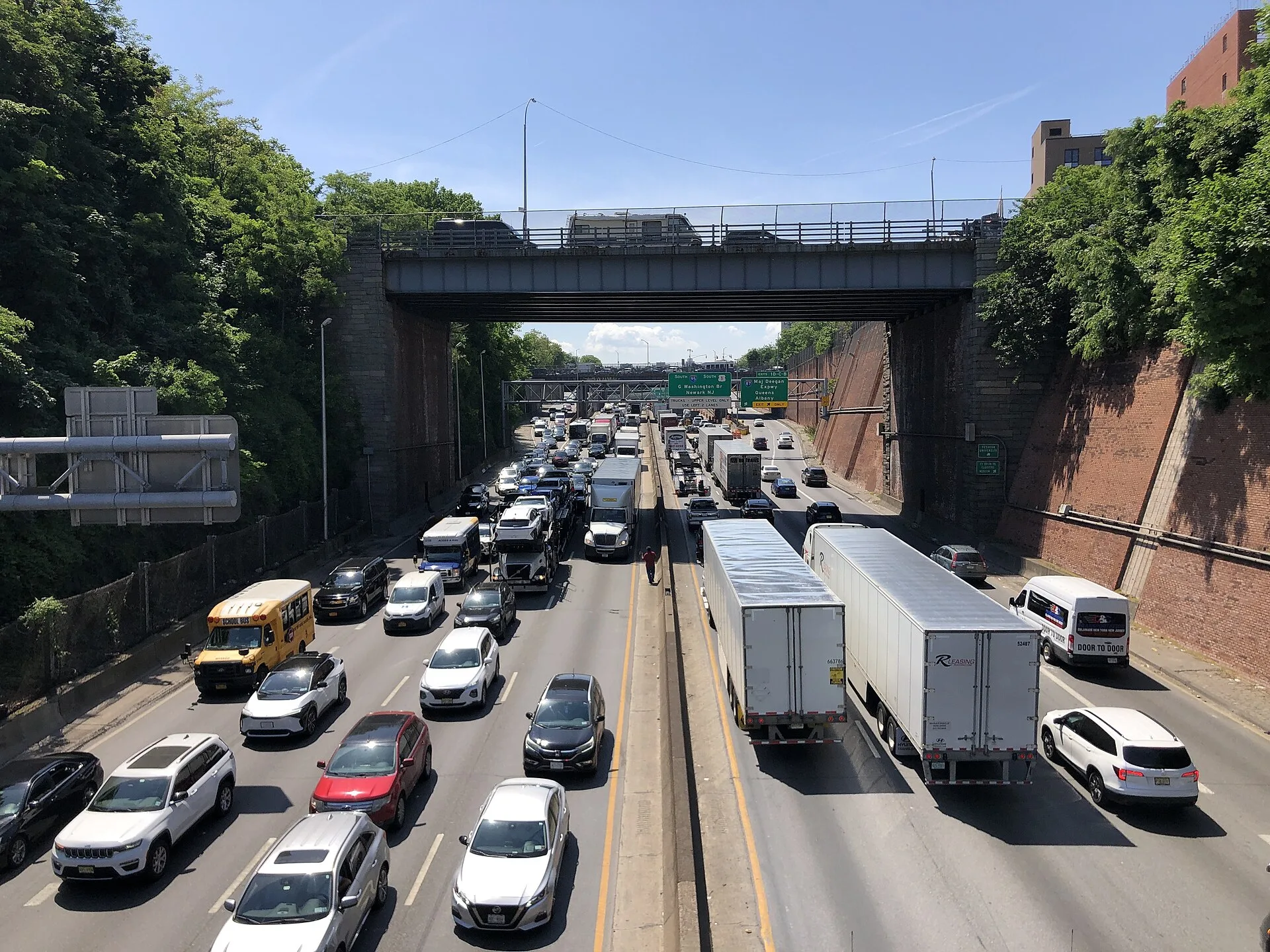
The Bronx has also long carried an unfair share of New York City’s transportation and industrial infrastructure. The Cross-Bronx Expressway, the Major Deegan Expressway, the Hunts Point Distribution Center, waste transfer stations, and heavy-truck routes expose residents to diesel exhaust, fine particulate matter, and other hazardous pollutants. Hunts Point is one of the clearest examples of The Bronx’s asthma crisis. Children in the neighborhood experience asthma-related emergency-department visit rates among the highest in New York City.
A two-year community air-monitoring effort by the New York State Department of Environmental Conservation (DEC) used specialized equipment mounted in vehicles to drive through neighborhoods and measure particulate pollution at the street level. Instead of relying only on stationary monitors, researchers collected measurements as they traveled block by block and found elevated pollution levels along the Bruckner Expressway in the vicinity of Hunts Point and Port Morris. This included nitrogen dioxide and black carbon, with Hunts Point also showing elevated levels of fine particulate matter (PM2.5). The study identified these areas as having elevated mobile-source pollution, consistent with their heavy truck traffic, manufacturing, automotive activity, and waste and industrial facilities. It also found higher levels of vehicle-related pollution along the Cross Bronx Expressway, where truck volumes are among the highest in the Bronx.
This is precisely the kind of information that should guide public investment. As part of the environmental-justice mitigation commitments associated with congestion pricing, the MTA is providing $20 million to the NYC Department of Health and Mental Hygiene (DOHMH) to improve childhood asthma outcomes in The Bronx. Of that amount, $8.9 million is designated for a new community-based Bronx Asthma Program and neighborhood asthma center initiative, while another $11.1 million will expand asthma case management, including in-school medication administration and self-management education.Through the DOHMH’s Bronx Asthma Initiative, the city is expanding asthma programming through the Bronx Bureau of Neighborhood Health while also expanding school-based asthma case management through the Office of School Health. The initiative’s goal is to reduce asthma morbidity and mortality among children in The Bronx and advance racial equity in childhood asthma outcomes. This is exactly the kind of coordinated approach The Bronx needs.
The initiative includes an expansion of the Asthma Case Management Program to 15 additional Bronx schools, funded by congestion-pricing revenue. The program is designed to support students with poorly controlled asthma and their families, with schools selected based in part on the prevalence of poorly controlled asthma and their location in environmental-justice communities identified by the MTA. The Bronx Asthma Program, led by The Bronx Bureau of Neighborhood Health, is similarly focused on the broader conditions that contribute to poor asthma outcomes. Its priorities include enhancing the delivery of guideline-based asthma care, expanding home environmental trigger reduction, providing asthma self-management support, establishing a Bronx Asthma Resource Hub, and creating a South Bronx Asthma Partnership to strengthen asthma efforts in the South Bronx.
However significant this investment is, it is the floor, not the ceiling, for addressing these decades-long disparities. The Bronx needs permanent and sustained funding. City and state leaders should build on the current investment with recurring public funding that makes The Bronx Asthma Center and related programs permanent institutions rather than time-limited initiatives. The goal should not simply be to establish programs; it should be to create durable infrastructure that Bronx families can rely on year after year. Most importantly, sustained funding would allow the Bronx to build something that can grow and evolve with the needs of its communities, namely the Bronx Asthma Center, a comprehensive center focused on preventing and managing asthma while addressing the environmental and social conditions that worsen it.
The proposed South Bronx Asthma Partnership offers an important model for addressing this crisis. Residents and community-based organizations should not simply be recipients of city programs. They should have a meaningful role in shaping them, identifying gaps, setting priorities, and advocating for the policies and resources needed to improve health outcomes. A parent whose child repeatedly ends up in the emergency room should not have to navigate separate systems for medical care, housing problems, pest infestations, school support, and environmental concerns.
The asthma center can help make those systems work together as a Bronx Asthma Resource Hub where residents, providers, schools, community organizations, and elected officials can access information, resources, referrals, and education.
The Bronx has spent generations living with the consequences of decisions made without sufficient regard for the health of its residents. Highways were built through communities. Truck routes were concentrated near homes. Industrial and waste facilities were located alongside neighborhoods. At the same time, families have struggled with poverty, inadequate housing, and limited access to health resources.
The Bronx deserves an asthma infrastructure that matches the scale of the crisis. The message to City Hall, the New York City Council, Albany, the MTA, the DOHMH, and our health and environmental agencies should be clear: The Bronx has carried this burden long enough. The current investment is an important start, but it cannot be the end. The Bronx needs permanent, sustained funding for asthma prevention, treatment, environmental health, and community-based services. We should fully fund a Bronx Asthma Center, prioritize the communities carrying the greatest burden, and make asthma prevention and environmental health a permanent investment in our borough’s future.