

The New York governor’s race is not your typical state election. It’s a proxy war in the age of populism — and the final spread, more so than the winner, will suggest where America’s moderates may be heading in elections to come.
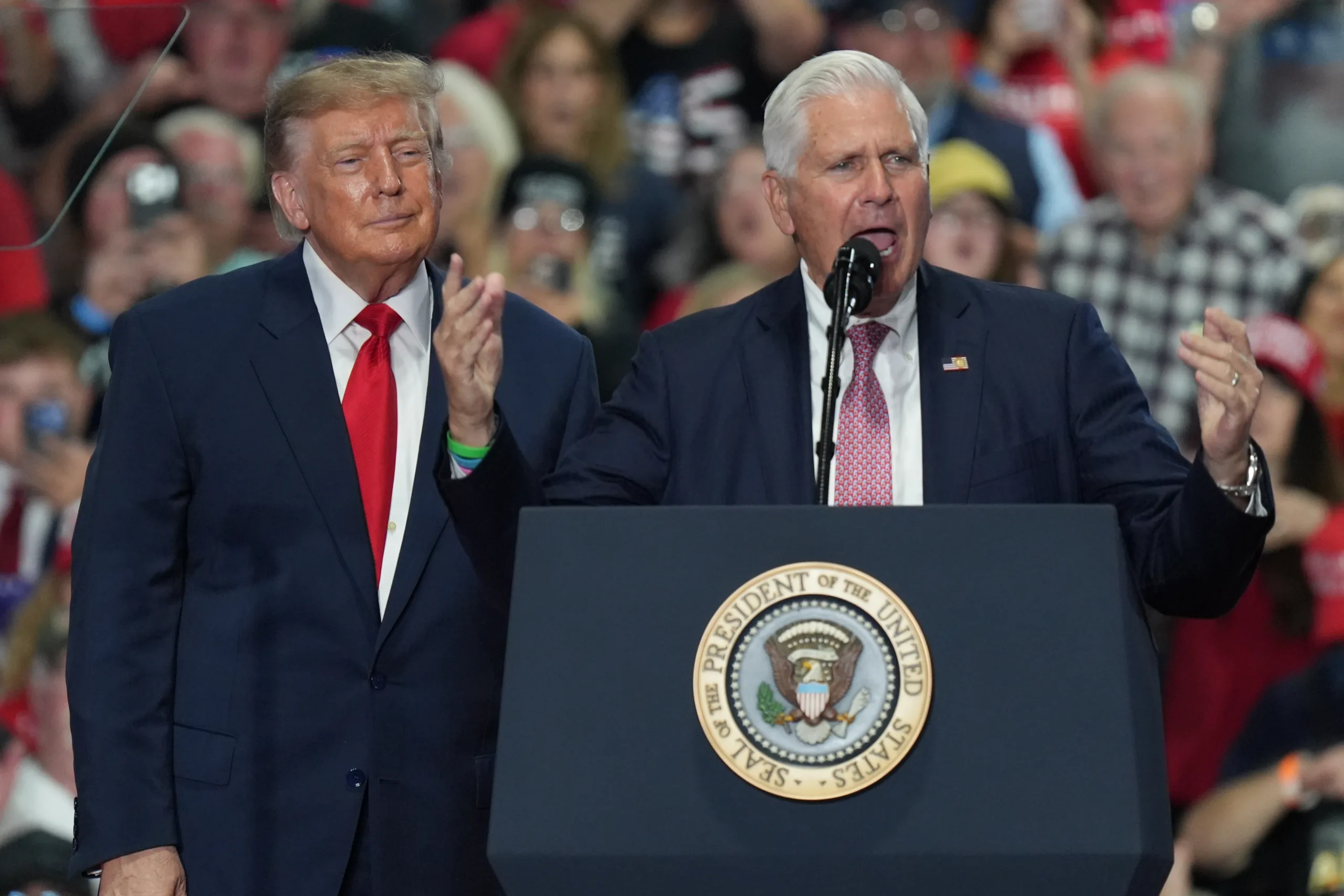
On Nov. 3, incumbent Democratic Gov. Kathy Hochul will face off against Republican Bruce Blakeman, an attorney and politician currently serving as the 10th county executive of Nassau County, Long Island.
On the campaign trail, both candidates have sought to tie their opponent to the most visibly controversial populist within their respective political camps. For Democrats, that’s President Donald Trump; for Republicans, especially in New York, that’s Mayor Zohran Mamdani.
“You support every single thing that Donald Trump does,” Hochul said to Blakeman in last week’s gubernatorial debate.
“‘Mamdani the Commie’ and ‘Comrade Kathy’ — they have this completely backwards because wherever they’ve instituted socialism it’s been making people miserable,” Blakeman said of his opponent in an interview.
Yet New Yorkers care about the issues. Despite the two populist personalities dominating campaign discourse, the battle will come down to two fundamentally different approaches to New York’s economic woes.
Taxes and the cost of living pose the primary challenge. They rank as the top two issues for New Yorkers, according to a Cornell poll. But how does a candidate appeal to an increasingly frustrated middle class without surrendering to coalition extremes?
New York has long struggled under one of the highest marginal income tax rates in America (number three, at 10.9%, after Hawaii and California). New York City residents, who typically decide elections, bear the brunt of that burden.
Blakeman has made tax relief the core of his platform. His signature proposal would eliminate state income taxes on the first $50,000 of income for individuals and $100,000 for married couples.
It’s an ambitious plan that would put money back into middle-class pockets, but it would require deep cuts to balance a budget facing an estimated $32 billion shortfall over the next three years, according to the state comptroller.
“You probably have to come up with $60 billion in cuts because you’re losing the federal [state spending] matches also,” State Senate Finance Chair Liz Krueger told Politico.
In the age of populist promises, Blakeman is positioning himself as the sensible tax-cutter compared to “Comrade Kathy.” But will struggling New Yorkers really accept a tax break if it means sacrificing many of the state programs they have become accustomed to? Maybe, but Hochul is banking on no and is instead positioning herself as the sensible moderate.
Hochul’s campaign points to the affordability measures she’s already taken as governor.
“You will note, there has not been a tax increase on income tax or corporate taxes since I’ve been governor,” Hochul told the New York State Business Council in September.
She highlights her “middle-class tax rebate,” expanded child tax credits, and checks sent to offset inflation and energy costs. Yet, as my father, a registered Democrat, recently put it: “My heating bill is over $1,000 a month — what’s $200 going to do?”
Hochul also hasn’t explained how she will address upcoming budget deficits, even after increasing the state-funded operating budget by 40% in her five fiscal years as governor. This spending expansion has targeted universal childcare, healthcare, education, and violence prevention — initiatives that differ only in degree from from those championed by left-wing figures like Mamdani.
Hochul expects voters to view her as a moderate who delivers vital services. But 42% of voters now list affordability as their primary concern — up from 28% two years ago, per Cornell polling — while two-thirds say the state economy has deteriorated. Will moderates accept more of the same when Hochul’s major programs align with more radical options? Blakeman is betting they won’t.
Ultimately, Blakeman faces long odds. New York, buoyed by the city and its suburbs, remains a progressive blue stalwart. The RealClearPolling average currently shows Hochul up nearly 13 points, at 53.3% compared to Blakeman’s 40.5%. In all likelihood, Hochul will win another term.
A clear victory would confirm what many Republicans fear: a growing alignment between the liberal establishment and the Democratic Socialists of America (DSA) leaning left. If moderates remain unfazed in statewide contests, Democrats will view it as a signal to lean further left, prompting Hochul to move closer to Mamdani.
If the final margin is significantly narrower than expected, however, Democrats may take it as a warning to pull back. Trump may no longer serve as an all-purpose boogeyman, and voters may see through candidates who campaign as moderates but govern as spending-heavy populists.