



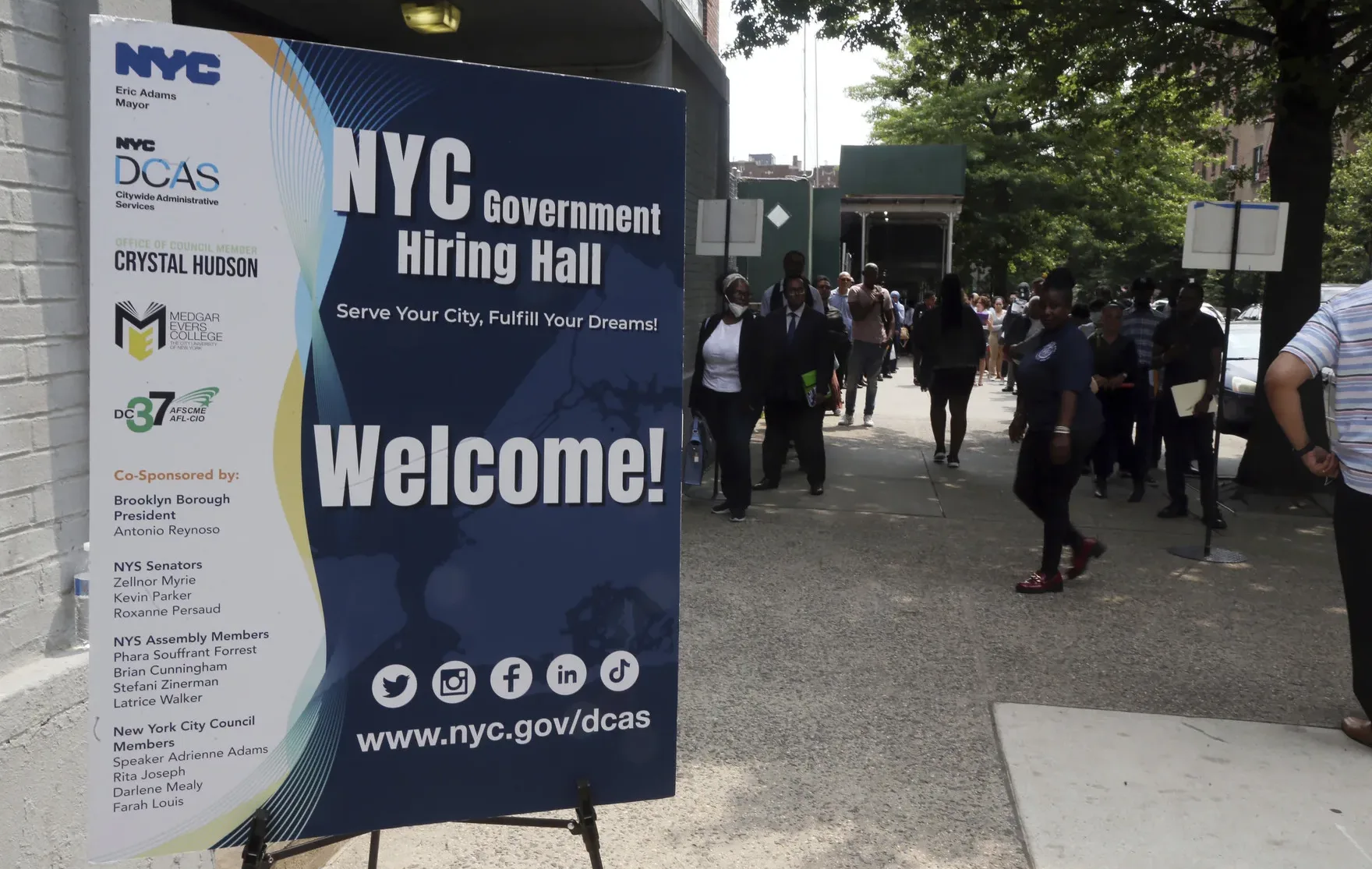
New York City struggles to hire nurses, engineers, planners, and countless other public servants. Some vacancies sit open for months or years, and some never get filled at all. The result is slower services, weaker infrastructure, and a government that cannot meet public expectations.
For decades, Albany’s civil service rules have taken most of the blame for a hiring process that routinely stretches to 15 months. State law does impose real constraints, but New York City already has far more authority to modernize its own system than most people realize.
The Department of Citywide Administrative Services (DCAS), the agency that oversees hiring, controls everything from exam design and candidate scoring to title classifications and recruitment processes. The City has had the power to improve much of this system for decades. What it has lacked is a mandate to act, the resources to follow through, and accountability for results.
The Charter Revision Commission – aka, the Commission on Government Efficiency (COGE) – has an opportunity to change that. Rather than treating hiring reform as a problem for Albany to solve, the Commission can require a set of practical, achievable changes that would make city government faster, more effective, and far more competitive for talent.
Five reforms would make an immediate difference.
1. Move beyond the multiple‑choice test.
Most New York City civil service exams are still rigid multiple‑choice tests. They don’t have to be. DCAS writes and administers its own exams without state review of the questions, meaning the format is entirely within the City’s control. Structured interviews, work‑sample tests, and performance‑based assessments are all viable alternatives—and all better measures of whether someone can actually do the job.
New York State is already shifting toward “training and experience” exams that evaluate an applicant’s work history and qualifications rather than their ability to memorize a study guide. These exams are faster to process, and a SUNY analysis found that candidates of color tend to score better on them than on traditional tests—making the process both more efficient and more equitable.
COGE could require DCAS to undertake a comprehensive exam redesign and ensure the City provides the resources to do it.
2. Give managers flexibility to find the right fit.
When a private employer needs to hire, they post a job, review applications, interview candidates, and select the best fit. New York City government does not operate that way.
For most roles, the City must hire from an exam list: a ranked roster of everyone who passed a civil service test for a given title. When a position opens, the hiring manager must call candidates strictly in score order. They cannot skip ahead to someone better suited for the specific role, recruit a promising applicant, or prioritize someone who actually wants the job. Lists can be hundreds of names long and years old. Managers call through a list that can be hundreds of names long and years old, until they find three people willing to consider the job.
Albany sets this “rule of three,” but DCAS has significant discretion in how it scores and groups candidates. Band scoring—used widely in other jurisdictions—replaces precise numerical rankings with tiers. Everyone in the top tier is considered equally qualified, and managers can choose among them based on fit, skills, and the needs of the role.
Nashville uses this approach, rating applicants on their experience and placing them into outstanding, well‑qualified, or qualified bands. Hiring managers select from the “outstanding” group based on fit, skills, and the specific needs of the role, creating a faster, more flexible process that still preserves merit-based hiring.
COGE could mandate that DCAS adopt band scoring and ensure the City funds the transition, while leaving implementation details to the agency.
3. Remove exam requirements for roles that already require a license.
To become a city nurse, engineer, or bus driver, applicants must already pass rigorous state licensing exams. Yet the City requires them to take an additional civil service test before they can be hired.
DCAS has the authority to propose removing exam requirements for titles where an independent licensing process already exists. The State Civil Service Commission must approve the waiver, but the case is straightforward. Commercial drivers license holders pass a state skills assessment. Registered nurses pass the National Council Licensure Examination. Licensed engineers pass the Principles and Practice of Engineering (PE) exam. Each has already demonstrated competency through a standardized, independent process.
Historically, DCAS has pursued these reclassifications one title at a time, usually only when an agency requests it. COGE should require a comprehensive audit of all competitive titles with existing licensure or certification, followed by a batch reclassification request to the State. Persistent vacancies in nursing, engineering, and skilled trades are affecting real services for real New Yorkers, and the fix is sitting in plain sight.
4. Classify emerging tech and data roles as exempt.
The City is competing with the private sector for data scientists, cybersecurity leaders, and AI policy experts—and losing. One reason is that it is trying to hire them through a process designed for a paper‑based era.
The Mayor already has authority to exempt certain senior and policy‑level roles from exam requirements without state approval. Historically, this power has been used for political appointees, but it applies equally to specialized technical roles. For senior technology, cybersecurity, and emerging‑tech positions, qualifications are experience‑dependent and judgment‑based in ways no written exam can capture.
COGE could outline a process for designating these roles as exempt, allowing the City to recruit for them the way any competitive employer would.
5. Modernize recruitment infrastructure.
The current model asks far too much of job seekers. Before a position is even posted, candidates must find, register for, and pass a civil service exam for that specific title—essentially pre‑qualifying for a job they cannot yet see. After the exam, results are processed, a list is certified, and that list can sit untouched for up to four years. By the time an agency is ready to hire, many candidates have moved on.
Continuous recruitment solves this by accepting applications on a rolling basis, offering exams frequently, and keeping candidate lists active rather than letting them go stale.
Cities that have modernized around this model have seen dramatic results. Baltimore consolidated hiring events, built active candidate pipelines, and cut vacancies in half. San Francisco procured a modern applicant‑tracking system, built internal capacity, and reduced time‑to‑fill by 25 percent. DCAS could do the same.
COGE could mandate continuous recruitment and process improvement for hard‑to‑fill roles—or for all roles. But the mandate must come with resources. DCAS is itself understaffed and operating below capacity. Requiring modernization without funding is how reform efforts stall, and the Commission should say so plainly.
A final word: Albany’s role and the last-mile bottleneck.
There is one area where state action truly matters. The NY HELPS program has filled more than 50,000 jobs statewide—roughly 20 percent of the state workforce—by temporarily suspending civil service exams and requiring agencies to use structured interviews and experience‑based assessments instead. This allows hiring to continue while broader reforms take hold. The Adams Administration declined to join, leaving thousands of potential hires on the table. The Mamdani Administration should request entry for the remaining duration, through June 2028, paired with the Charter reform roadmap above.
But even the best-designed hiring process can collapse at the final stage. Candidates clear every hurdle and then wait—sometimes for months—while budget sign‑offs, headcount approvals, and start‑date clearances move through channels with no timeline and no accountability. Without cross‑agency operational investment, reform withers. The Office of Management and Budget must be a partner in fixing this last-mile bottleneck.
DCAS needs to be empowered and resourced as the engine of city hiring. DCAS Commissioner Yume Kitasei and the human‑capital team represent the kind of public sector leadership that makes reform actually possible—experienced, reform-minded, and eager to build something better. But they are being asked to modernize a system serving 300,000 employees without the necessary capacity. The authority is there, the talent is there, and the moment is right. COGE can—and should—create the mandate and the momentum.