


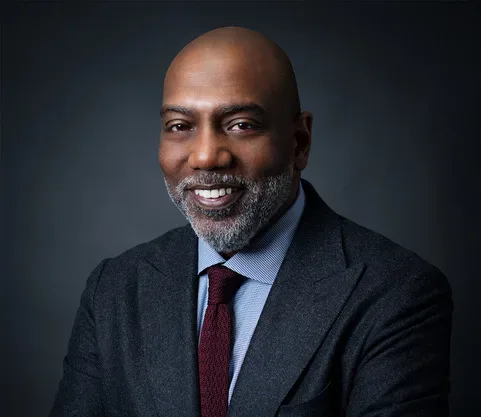
Abdul El-Sayed’s win in Michigan’s Democratic Senate primary is emerging as the most politically consequential Democratic contest of 2026. Unlike Zohran Mamdani’s victory in New York City, El-Sayed prevailed across an entire battleground state — one Democrats must hold if they hope to reclaim the Senate majority. Michigan is a microcosm of modern Democratic coalition politics: organized labor, suburban moderates, Arab American communities, college‑town progressives, rural Democrats, and one of the nation’s largest Black electorates. Winning there requires more than ideological enthusiasm. It demands a coalition capable of competing in a politically fractured state. The implications reach far beyond Michigan’s borders.
Turnout surged, undercutting the sweeping ideological narratives that often accompany progressive victories. Voters clearly signaled frustration with recent election cycles and a hunger for change. Yet El-Sayed’s relatively narrow margin shows that Democrats are not aligned on what that change should be. The story here is less about ideological realignment than about electoral urgency — a desire for something different, without consensus on what “different” means.
One familiar pattern, however, stood out. Even as El-Sayed built a broad statewide coalition, the results suggest progressive candidates still struggle to consolidate Black voters at the same levels they attract younger, White, and highly educated progressives. El-Sayed performed impressively across the state, but heavily Black areas like Wayne County — home to Detroit — broke decisively for Rep. Haley Stevens, with margins strong enough to nearly produce an upset.
This echoes Bernie Sanders’ presidential campaigns, when progressive enthusiasm consistently outpaced his support among many Black Democratic primary voters, especially older voters. But the conventional explanation — that Black voters are simply more moderate — misses the point.
Rather than interpreting Black political behavior primarily through ideology, we should understand it through history, and through a long Black political tradition that blends movement politics with institutional politics.
For more than a century, Black political strategy has rarely chosen between protest and governance. It has pursued both — pressing institutions from the outside while seeking power within them. This inside‑outside strategy has shaped Black political judgment across generations. Jill Watts captures this dynamic in The Black Cabinet, showing how Black officials in Franklin Roosevelt’s administration understood that access did not equal equality. They recognized that holding positions inside government created opportunities to influence policy that protest alone could not achieve. Meanwhile, civil rights organizations continued organizing outside government because institutions rarely reform themselves without sustained pressure. One strategy created leverage; the other converted leverage into durable policy. That dual approach endures.
Political scientists Katherine Tate and Michael Dawson anticipated much of this decades ago. Tate described the evolution of Black politics as a movement “from protest to politics,” documenting how the struggle for civil rights increasingly required not only demanding inclusion but exercising political power within governing institutions. Dawson’s theory of linked fate argued that Black political decision‑making often reflects judgments about the long‑term well‑being of the group rather than purely individual ideological preferences. Together, their work suggests that Black political judgment has historically been less about locating oneself on a left‑right spectrum than about evaluating who can be trusted to advance collective interests over time.
That history encourages a different set of political questions: Can this candidate govern? Can this coalition endure? Will these institutions become more responsive — or less?
These are not inherently moderate or progressive questions. They are institutional ones, which helps explain one of the most familiar and most misunderstood phrases in Black politics.
When Black voters say of a candidate, “We don’t know you,” they are rarely making a literal statement about name recognition. Nor are they necessarily questioning someone’s racial identity or biography. More often, they are making an institutional assessment.
Have you fought the same battles? Do you understand the institutions we have spent generations trying to change? Who can vouch for you? Will you still be standing with us after Election Day?
The question is ultimately about familiarity, affinity, and allyship—not as symbolic gestures, but as evidence accumulated over years of shared political struggle. It is a proxy for trust. Black voters are asking whether a candidate has demonstrated commitment to long‑term goals, understands the community’s historical experience, and can be counted on when governing becomes more difficult than campaigning.
In 2008, Barack Obama did not immediately consolidate Black voters despite the historic nature of his candidacy. Many older Black voters, clergy, elected officials, and institutional leaders initially supported Hillary Clinton. Their hesitation was not a rejection of Obama but uncertainty about whether a first‑term senator could assemble a governing coalition capable of winning the presidency. Only after Obama won Iowa did perceptions shift dramatically. Iowa became proof of institutional viability, convincing Black voters he could translate movement energy into governing power.
The same dynamic emerged in 2020. Despite the presence of two prominent Black candidates, Kamala Harris and Cory Booker, many Black institutional leaders ultimately rallied behind Joe Biden after South Carolina Representative Jim Clyburn’s endorsement. Clyburn’s support served as institutional validation from a trusted leader whose political judgment had been earned over decades.
New York politics offers similar examples.
The recent scrap between Mayor Mamdani and Queens Borough President Donovan Richards over a proposed property tax hike in Southeast Queens was only partly about taxes. It was also about neighborhood stability, homeownership, municipal finance, and governing competence — concerns shared among many Black homeowners and small landlords. Their judgments reflected an assessment of institutional stewardship as much as ideological preference.
Education provides perhaps the clearest illustration. For decades, Black communities have challenged inequities surrounding New York City’s Specialized High School Admissions Test (SHSAT). Yet the debate has generally focused on making the system more equitable. Whether advocating changes to admissions criteria, expanding gifted education earlier in the pipeline, improving middle schools, or increasing access to rigorous academic preparation, Black leaders have often pursued reform within the existing public education system while continuing to criticize its inequities. There has never been a single Black position on the SHSAT. But there has been a long tradition of attempting to improve institutions rather than assuming they must be discarded.
This pattern appears across American public policy. Black communities have experienced wave after wave of reform—desegregation, community control, standards‑based accountability, charter schools, mayoral control, urban renewal, criminal justice reform, and neighborhood redevelopment. Some initiatives expanded opportunity; others produced uneven results. Communities repeatedly asked to bear the risks of reform became sophisticated judges of institutional capacity. They learned that ambitious ideas succeed or fail not simply because of ideology, but because of implementation, legitimacy, leadership, and governance. Seen this way, skepticism toward some progressive candidates is not necessarily skepticism toward progressive policies.
Polling consistently shows that Black Americans strongly support raising wages, protecting labor rights, expanding health care, investing in education, and reducing economic inequality. The apparent contradiction emerges only if ideology is treated as the primary explanation for political behavior. History suggests something different: Black voters have often evaluated candidates according to whether they can transform institutions without undermining them, build durable governing coalitions rather than temporary movements, and convert protest into policy.
Michigan reinforces that lesson.
El-Sayed demonstrated that a progressive candidate can assemble a winning statewide coalition in one of America’s most competitive states—a significant achievement with national implications. But his victory also suggests that progressive candidates still have important work to do in earning the confidence of many Black voters, who will continue to evaluate candidates through a political tradition shaped by generations of balancing protest with governance, disruption with institutional durability, and movements with the difficult work of governing.
This shifts the conversation away from the simplistic question of whether Black voters are “moderate” and toward a richer historical account of a political tradition that has long combined movement politics with institutional politics rather than treating them as opposing choices.