


Most people know the Supreme Court’s Citizens United v. FEC decision—the shorthand for everything broken about money in politics, which unleashed “Super PACs” to spend unlimited sums on elections. Running for Congress in NY-12, I expected to face big money. I didn’t expect outside groups to spend over $40 million on a single House primary.
What I also failed to appreciate was the lack of rules governing the media. News outlets enjoy virtually unlimited discretion to decide who gets covered, regardless of who appears on the ballot.
The foundation for this discretion rests partly on a 1998 Supreme Court ruling: Arkansas Educational Television Commission (AETC) v. Forbes. In a 6–3 decision written by Justice Anthony Kennedy, the Court held that a state-owned public television network acted legally when it excluded independent candidate Ralph Forbes from a televised debate on the grounds that he lacked “appreciable public interest.”
While Forbes applied to public television, private broadcasters and digital media operate with even fewer restrictions. If the Supreme Court refused to force a taxpayer-funded station to grant a candidate airtime during debates, private outlets face zero obligation to do so. And print outlets like The New York Times and Politico, are completely free to decide who exists in the public eye. I didn’t fully realize this until I was the one left off the page—and off the stage.
When WPIX held a televised debate and excluded the two women in the race—myself and Laura Dunn, both of whom were polling behind four male candidates—the exclusion was entirely legal. That is precisely the problem. Outlets are for-profit companies, not neutral arbiters. By funneling coverage almost exclusively to four of the eight candidates on the ballot, they left those excluded with no recourse.
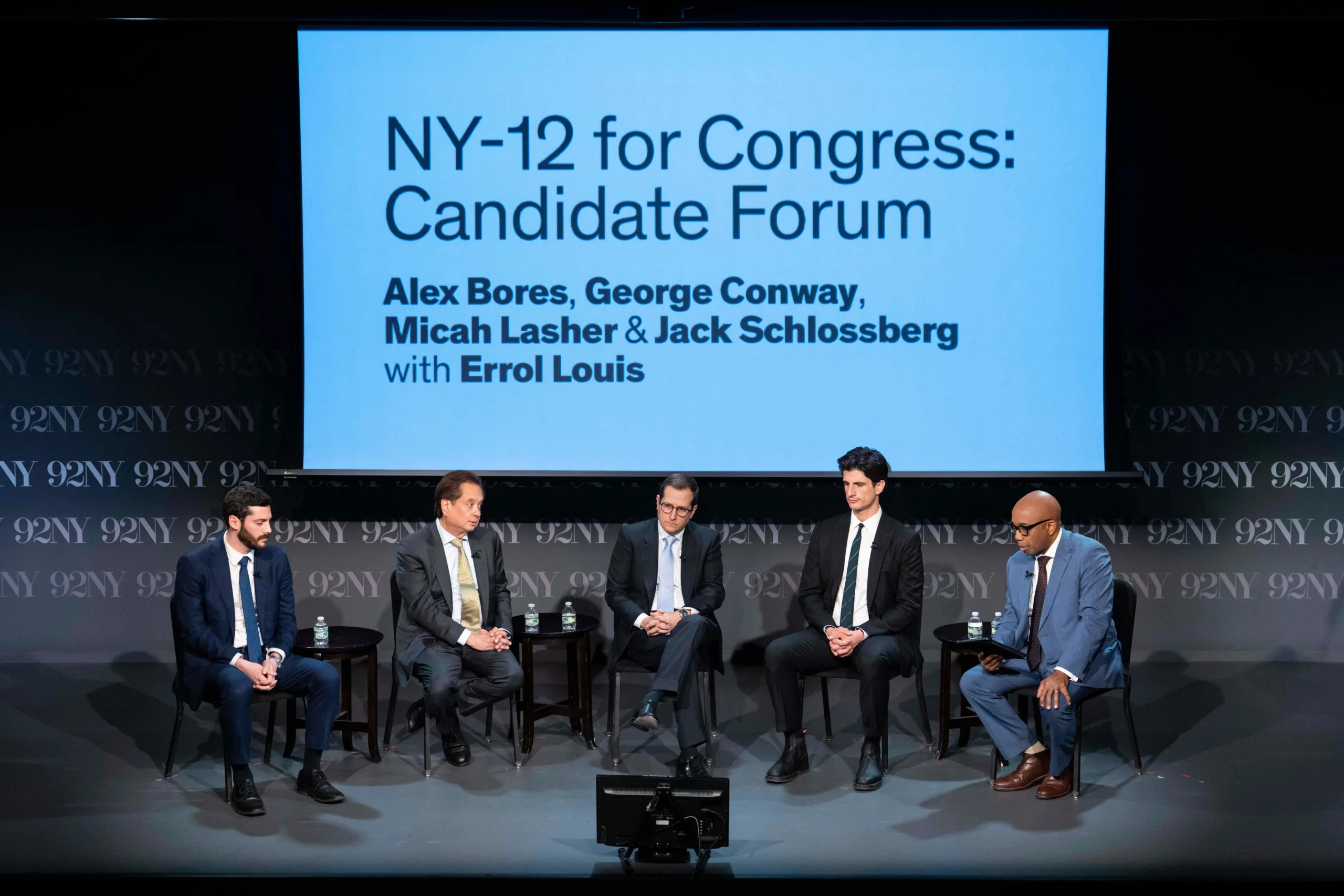
This gatekeeping spilled into other public forums, including events at the City University of New York (CUNY) and the 92nd Street Y. The few forums that published selection criteria relied on money raised and polling numbers—creating a self-reinforcing feedback loop where media exposure drives polling and fundraising, which in turn justifies more media exposure.
Outlets like WNYC, West Side Rag, Gothamist, W42ST, and The Nation took a fairer approach by profiling excluded candidates or covering the media gap directly.
Furthermore, the media’s “viability” metrics proved to be a poor predictor of actual results. George Conway—a commentator with no campaign experience—was granted a spot on nearly every major stage from day 1 based on his cable news profile. On Primary Day, he finished fifth. I finished fourth, ahead of him, despite being largely erased from the media narrative. Micah Lasher won with 39% of the vote, followed by Alex Bores (35%), Jack Schlossberg (11%), and me (7%).
Money, ground operations, endorsements, and timing all shape primary outcomes, but earned media provides essential credibility. The material impact of coverage was starkly visible during the single debate I participated in on NY1. The next morning, callers to WNYC’s Brian Lehrer Show noted they hadn’t known I was running until seeing me on stage. With early voting starting four days later, there was little time to convert that sudden momentum into votes. Even so, my total grew to more than double what independent polling had shown earlier.
Grassroots organizing can only carry a campaign so far; visibility is on the critical path to viability. Candidates build visibility through paid media (mailers and ads) or earned media (news coverage and debates). For candidates with less funding or without initial celebrity status, earned media is the only way to break through. Without it, donors assume excluded candidates have dropped out, starving campaigns of the resources needed to survive.
What would our elections look like if every ballot-qualified candidate were covered from day one?
While public discourse rightly focuses on Citizens United, we urgently need a parallel conversation about media standards. Courts will not mandate fairness, but newsrooms can adopt voluntary codes of ethics—publishing transparent criteria for how candidates are selected for coverage and debates. It would cost outlets nothing. The only question is whether newsrooms have the courage to commit.
Editor’s Note: Due a technical issue, an incomplete version of this column was prematurely posted. We regret the error.