


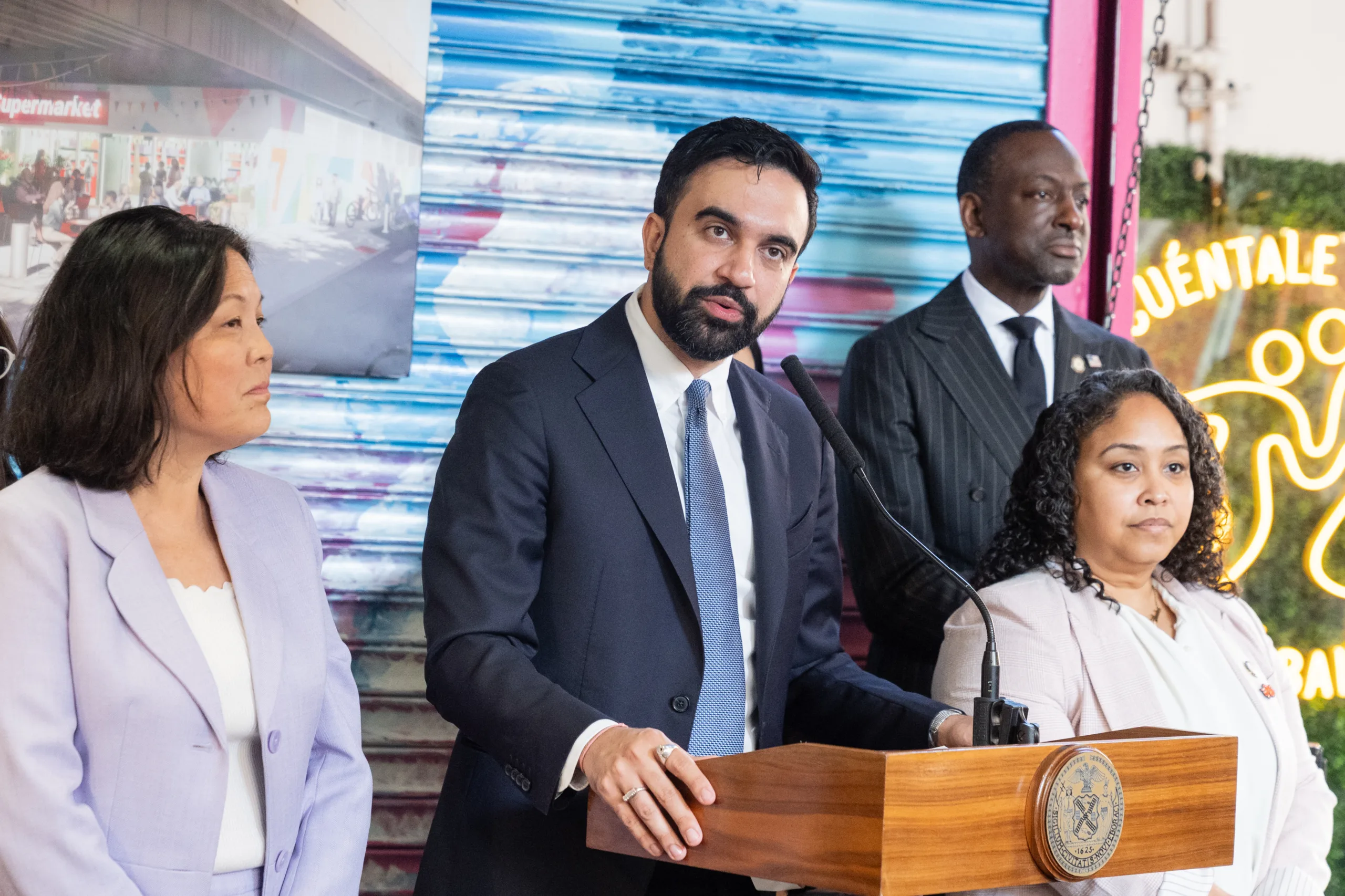
Affordability has become one of the defining pressures of life in New York, and it’s no surprise that policymakers are seeking novel ways to heed its siren call. Proposals promising lower‑cost essentials — from childcare to transit to groceries — tend to gain traction because they speak directly to the daily realities of residents who feel squeezed. The language of “free” or “discounted” services has become a familiar part of the political vocabulary, a shorthand for responsiveness in an era of rising costs. Against that backdrop, Mayor Mamdani’s campaign pledge to create municipally owned grocery stores has now taken a concrete step forward outlining how the city hopes to bring these stores to life.
The New York City Economic Development Corporation (NYCEDC) rolled out a 44-page Request for Proposals (RFP) to begin opening five city grocery stores, one in each borough, to address one aspect of the New York affordability issue. That’s an important challenge; what matters is how we do it. In this case, Mamdani does not trust the market to deliver affordable, high-quality groceries, so he is using these stores to mandate affordability. The RFP requires operators to discount a “core basket” of fresh foods by 30 percent. Yet it never defines the baseline for that 30 percent. We are already running uphill. Not to mention that grocery stores vary widely in pricing, from Whole Foods to small independent grocers, as they each offer something different in the market. The vagueness will be a serious liability for the project. How can these stores set prices against a baseline that doesn’t exist? They’ll be in violation without any way to correct course. This will invite more government intervention into the management and operation of these stores.
The RFP calls for a publicly funded, privately operated structure. The city will use vacant properties it already owns, and private vendors will manage the operations, labor, and the supply of goods. The first store is slated for the Bronx on what used to be a juvenile detention center and is now slated for a mixed-use development project. What could go wrong? It turns out, plenty. The city is also mandating that the operators provide high-paying jobs with family benefits. Grocery stores operate on a 1- to 3-percent profit margin. Simply eliminating rent and property taxes for the owners will not create a sustainable investment for the retailers. Moreover, this cost is estimated at a whopping $70 million, funded by taxpayers.
A quick run of numbers shows that Aldi can open 25 to 46 new grocery stores with that price tag. The average construction cost for their prototype store is $1.5 million, and it’s about 19,000 square feet. It makes you wonder whether Mamdani is really interested in cheaper groceries, or in a permanent municipal foothold in retail—the RFP’s push for a city-branded private label suggests it might be both. During his campaign, bodega owners protested that this was anti-competitive, and they argued that an alternative solution would be to increase EBT/SNAP benefits to help residents buy food from minority-owned grocery stores that are already struggling in these communities. Instead, the RFP states that the new grocery stores will not be allowed to have hot food delis, alcohol, cigarettes, or lottery tickets—a small concession to a small business that may be put under due to this feckless plan.
To add insult to injury, it’s not as if we haven’t tried this before. On a smaller scale, there have been initiatives in Baldwin, Florida, and Kansas City, Missouri (whose city-run store closed almost exactly one year ago). On a larger scale, one should look to the endless lines for groceries in the Soviet Union or modern-day Cuba. The mayor believes capitalism is the problem when it comes to affordability, but he has it backward; capitalism is the solution because it is a system of profit and loss. The best way to make groceries better and cheaper (more accessible) is to unleash market competition. Rather than the common trope that, in capitalism, it is us against the retailers, the reality is that retailers compete against each other for our business. The solution to cheaper groceries is to free the supply curve. Make it easy to enter and exit industries and stop the subsidies which create political winners and losers. Mamdani wants to eliminate profit, the very thing firms need to compete on affordability.
The threat of loss disciplines the firm owner; it’s what keeps his or her interests aligned with the customers. Profit and loss create a feedback loop directly from the customer, indicating what is acceptable. The system is not perfect, but neither are the alternatives which are far worse, and this one fosters value creation in a way that government-subsidized and owned firms cannot. Mamdani’s grocery store plan cannot work because it defies the laws of economics. Prices emerge from market exchanges through interaction among buyers and sellers; bureaucrats who argue for price limits cannot know them. Even if this were well-intentioned, it is bound to fail, and then New Yorkers will have wasted precious money and time on a fool’s errand. We should expect these stores to have lines and fewer choices, the opposite of what’s intended.
Mayor Mamdani is right to want better choices and affordability for New Yorkers, but allowing more market competition is the best way forward, particularly in low-income neighborhoods. A better option would be to allow market firms to build more and to ease the regulatory and tax burden on businesses so that they can compete and serve New Yorkers well.