


The temptation after a political upset is to treat it as something entirely new.
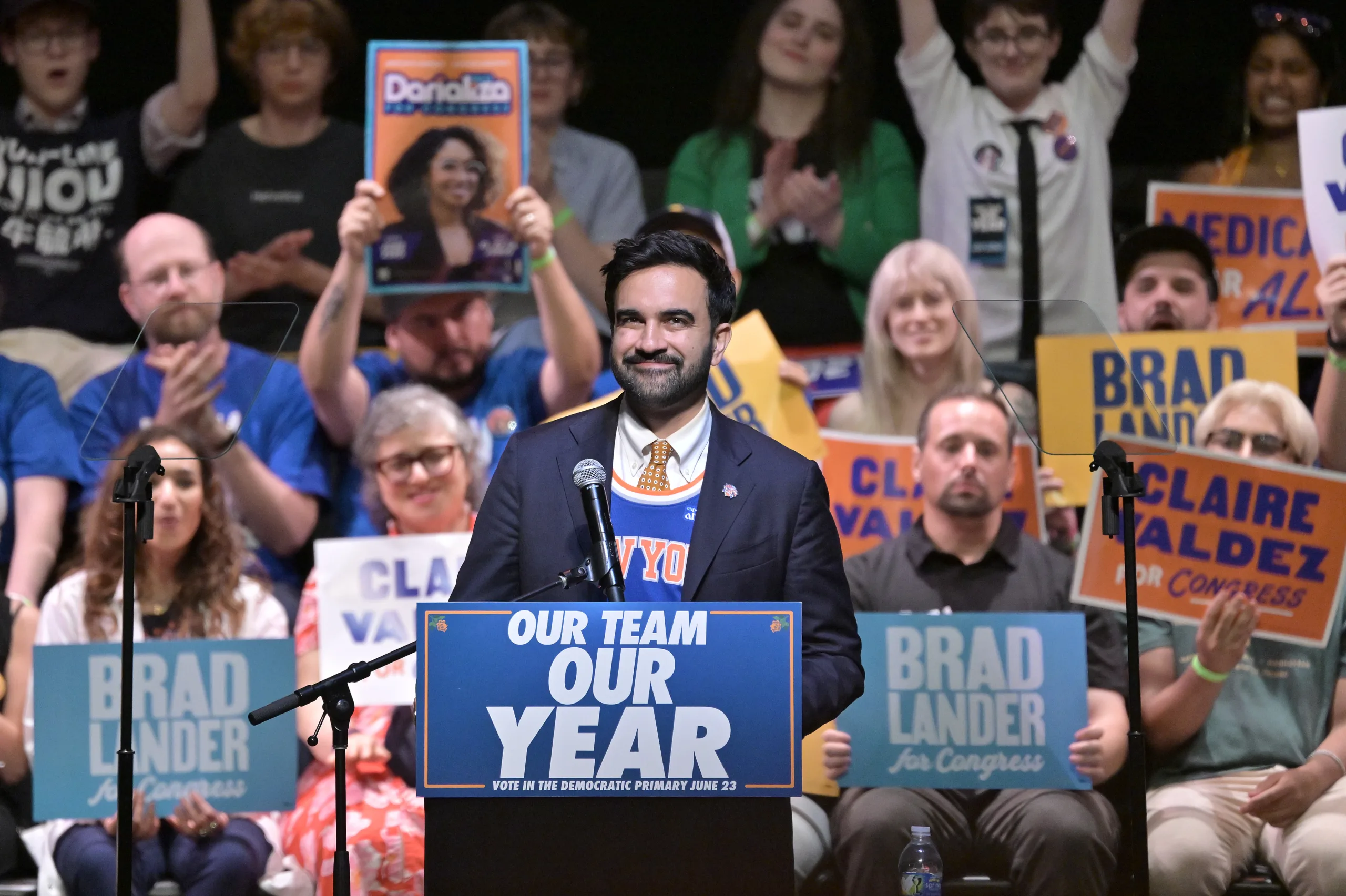
That is certainly how many observers are interpreting Zohran Mamdani’s sweeping victory of his endorsed candidates. Commentators have framed it as a revolt against the Democratic Party establishment, a triumph of democratic socialism, or evidence that younger voters are abandoning the political assumptions that have governed the party for decades.
There is truth in all of those interpretations. But they miss something important.
As political journalist Errol Louis recently observed, the Democratic Party is not a single movement. It is a coalition of movements. New movements do not replace old ones so much as layer themselves on top of existing political traditions. They inherit institutions, constituencies, strategies, and grievances from the coalitions that preceded them. The party’s history is not a series of clean breaks. It is a process of accumulation.
In that sense, what happened in New York is not unprecedented. It is the latest chapter in a recurring cycle of reform movements that emerge when voters conclude that existing institutions are no longer capable of delivering economic security, political representation, or moral legitimacy.
The New Deal coalition emerged from economic collapse. The civil rights movement challenged racial exclusion embedded within American institutions. Jesse Jackson’s Rainbow Coalition sought to unite constituencies that felt excluded from centers of political and economic power. Barack Obama’s coalition mobilized a younger and more diverse electorate around a promise of change.
Today’s insurgent left is operating within that same tradition.
What distinguishes this movement is not simply its policy agenda. It is a profound skepticism toward institutions themselves. Many younger voters came of age during the Great Recession, entered adulthood amid soaring housing costs, student debt, and widening inequality. They inherited a political system that often appears incapable of addressing these challenges while public trust in government, media, corporations, and other institutions steadily declined.
The result is a politics organized less around preserving institutions than questioning them. That helps explain why housing affordability, healthcare access, wages, climate policy, and public investment resonate so strongly with younger activists. These are not merely policy disagreements. They reflect deeper concerns about whether existing systems are producing broadly shared prosperity and opportunity.
Yet it would be a mistake to view this movement as entirely disconnected from earlier Democratic traditions. In many respects, it draws from currents that have long existed within Black political thought and organizing.
One of the earliest voices in that tradition was Hubert Harrison, the Harlem educator, writer, and activist often described as the father of Harlem radicalism. Writing in the early twentieth century, Harrison combined demands for racial equality with critiques of economic inequality, concentrated wealth, and political exclusion. He believed democracy required more than formal voting rights; it required meaningful access to economic opportunity and civic power. His insistence that ordinary people should exercise greater influence over the institutions shaping their lives anticipated debates that continue to animate politics today.
Harrison’s influence can be traced through a broader tradition of Black institution-building. Long before democratic socialism became fashionable among younger progressives, Black communities developed systems of mutual aid, collective action, and community self-determination. Churches, fraternal organizations, civic associations, and neighborhood organizations often provided resources and opportunities unavailable elsewhere.
The point is not that these traditions were socialist in a narrow ideological sense. Rather, they reflected a longstanding belief that communities possess both the right and responsibility to address shared challenges when existing institutions fall short. Many of the questions animating younger progressives today—about economic fairness, housing, healthcare, and democratic participation—have deep roots in those earlier traditions.
The same historical continuity appears in another area receiving renewed attention within Democratic politics: faith.
Much of the recent discussion surrounding Texas Democrat James Talarico has focused on his willingness to connect progressive policies to Christian teachings. Some commentators have portrayed this as a new discovery for Democrats. In reality, faith has never disappeared from progressive politics. It has simply been overlooked.
The modern civil rights movement emerged from the Black church. Martin Luther King Jr. drew upon a theological tradition that connected religious conviction to democratic participation. Jesse Jackson’s Rainbow Coalition transformed that moral language into a political movement focused on economic justice, voting rights, labor rights, and racial equality. Today, Sen. Raphael Warnock continues that tradition from the pulpit of Ebenezer Baptist Church, the congregation once led by King himself.
What many observers are calling a rediscovery is actually a return.
That history matters because successful political movements require more than policy agendas. They require a moral framework capable of explaining why change is necessary and what kind of society people are attempting to build. The civil rights movement understood this. So did the labor movement. Their leaders connected policy demands to larger questions of justice, dignity, and democratic responsibility.
The lesson from New York is not that every Democrat should become a democratic socialist. Nor is it that every candidate should suddenly begin quoting scripture.
The lesson is that voters are searching for authenticity, moral clarity, and a sense of purpose. They want leaders who can connect economic concerns to larger questions of fairness, dignity, and belonging. They want politics that feels responsive to the realities of their lives rather than protective of institutions that appear increasingly distant.
Whether the coalition emerging in New York can ultimately govern remains an open question. Every insurgency eventually confronts the same challenge: building institutions is often harder than criticizing them.
But New York’s election offers an important reminder for Democrats across the country. Political movements do not emerge from nowhere. They are built atop histories, traditions, and coalitions that came before.
The Democratic Party did not arrive at this moment overnight.
There are movements beneath this movement. Understanding them may be the key to understanding where Democrats go next.