



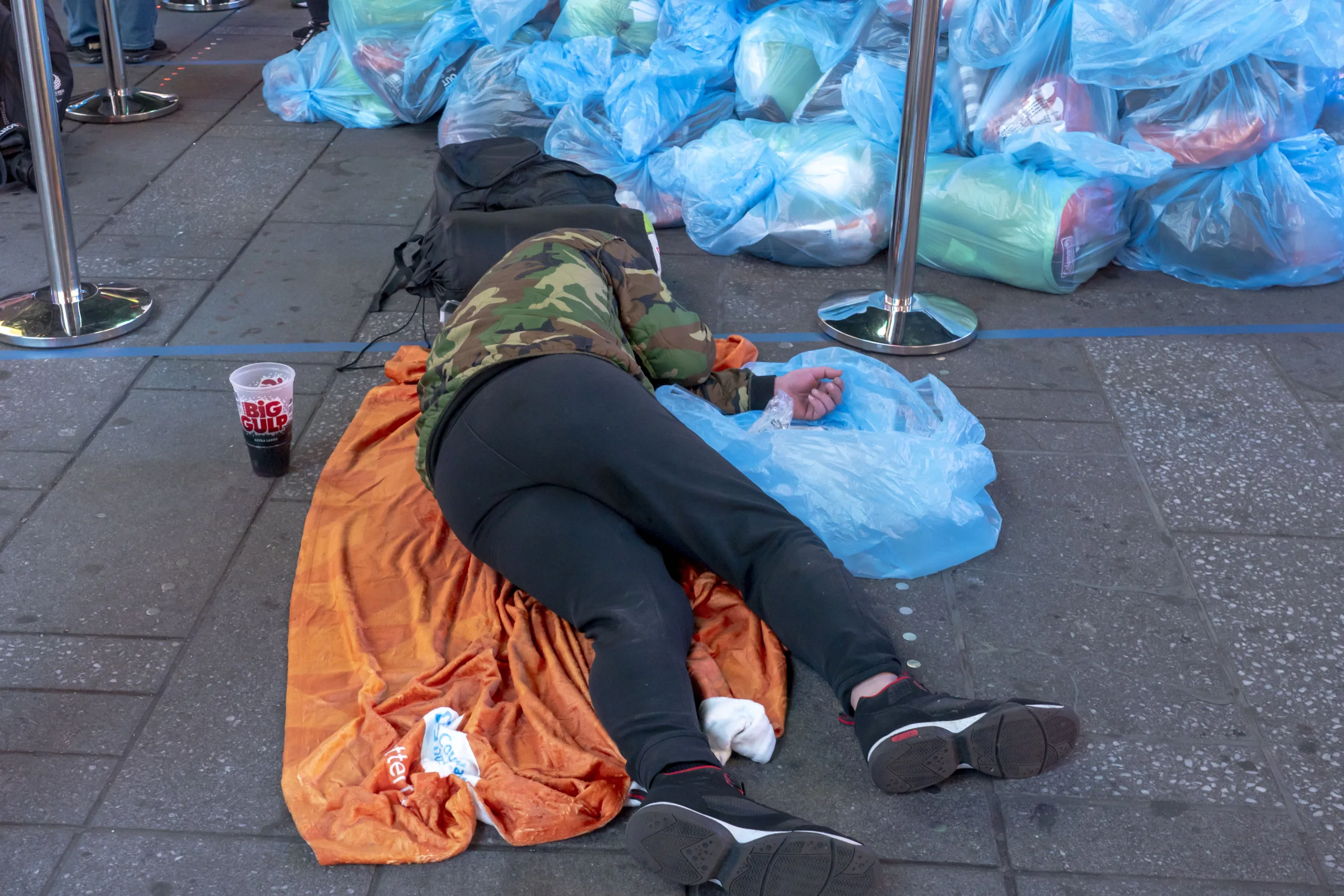
On April 27 in Binghamton, five boys—just 13 to 15 years old—allegedly punched and kicked Peter Bennedum until he stopped moving. Bennedum, 45, grew up in that city. He was a father who struggled with severe addiction. He lay on the sidewalk for two hours before anyone noticed. A week later, his family let him go at the hospital.
Police say the boys were following a social media trend: film an attack on a homeless person.
Days later in Times Square, three teenagers woke Leonides Baez as he slept outside the Sondheim Theatre, doused him with urine, and one of them stabbed him in the heart. He was 39, with two children. The boy told police it was part of a trend called “mess with crackheads.”
None of this should have happened.
A grown man shouldn’t be living on a sidewalk. If he was sick, he should have been somewhere with a bed, a doctor, and a chance. And we shouldn’t blame the police. They want to help, but they’re handcuffed by a system that has collapsed around them.
A 13‑year‑old shouldn’t look at a human being and see a prop. But children learn what they see. For two decades, New York has allowed people in obvious mental and physical collapse to rot on our streets. That neglect taught a generation of kids that some people simply don’t matter. A meme turned that human tragedy into a game. The families of those boys will live with the consequences forever. The victims’ families will never be the same. It is a tragedy all around.
No one wants to return to the thousand‑bed psychiatric hospitals of the 1950s—and we don’t need to. But for too many New Yorkers, we effectively replaced those facilities with nothing. Some severely mentally ill people cannot reliably keep outpatient appointments, so they go without medication. Then they disappear into the streets, untreated and unsafe.
For those suffering from addiction, the state has offered something worse than nothing. Downstate, New York operates state‑sanctioned heroin injection sites—illegal under state and federal law—where people are given a supervised place to shoot up and then sent back to the sidewalk. It keeps them hooked and exposed to danger. How is that smart or compassionate?
There is a better way.
Civil commitment means that when a person is so sick from mental illness or addiction that they can no longer care for themselves—and two doctors certify it—the state has a moral and legal duty to take them off the street and into care. This is not punishment. It is what any family would do for a gravely ill relative. Yet New York’s government turns its eyes from the mentally ill destitute every day. It is immoral—and dangerous.
New York needs a network of small, supervised residences, each with a few dozen beds, where patients receive tailored treatment under the supervision of mental health professionals. These facilities should be close enough to home that a mother can visit. What the severely mentally ill do not need is another roadside motel without services. Six people died in a homeless hotel fire in Endwell in June. That is what passes for a plan these days.
Meanwhile, the state is wasting billions. Three billion dollars in opioid settlement funds have been spent on frivolities like lawnmowers and baby showers. The comptroller recently uncovered $14.5 billion in unverified Medicaid home‑care billings over two years, and $2.6 billion in premiums for people who may not even live here. The MTA loses another billion annually to fare evasion.
Recovering even half that money could fund residential treatment for thousands now wandering our streets and towns. Under the incumbent attorney general, huge sums of taxpayer dollars are being abandoned to crime rings each year. That is another “shouldn’t.”
An empowered attorney general can stop the squandering of opioid settlement funds, break the fraud rings, and redirect recovered dollars into desperately needed treatment beds. The state must also conduct a forensic examination of every nonprofit shelter to determine where the $81,000 allocated per homeless person actually goes. A continually failing system must be made accountable.
The tragedies in Binghamton and Times Square should never have occurred. But they did, taking two lives and destroying many others.
We can do so much better than this, New York.
And we should.
Saritha Komatireddy is a candidate for New York State attorney general.