


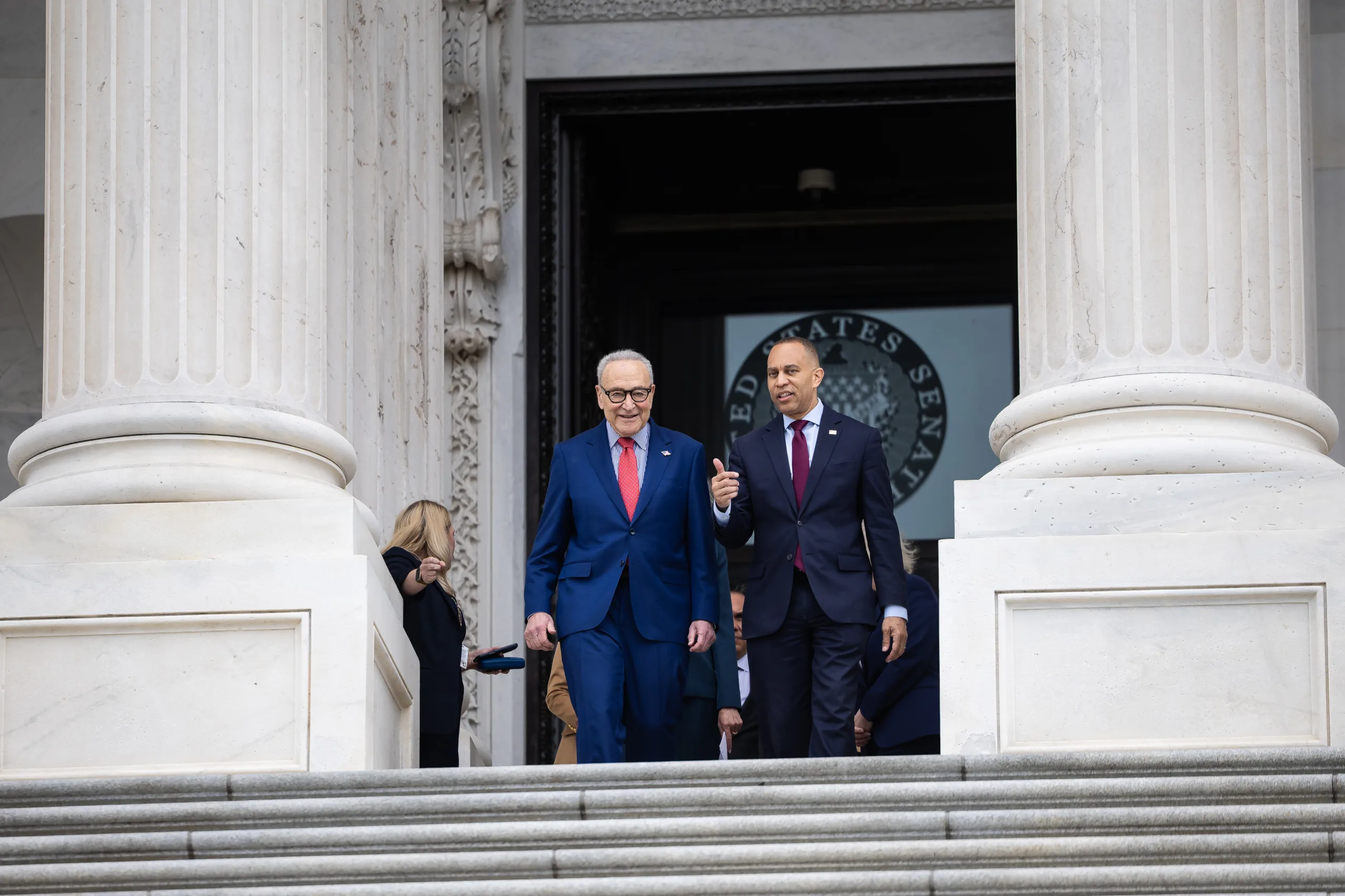
After Tuesday’s midterms, New York occupies a position of extraordinary political influence. Chuck Schumer and Hakeem Jeffries are positioned to lead Congress, while Governor Kathy Hochul enters a second full term with veto-proof Democratic majorities in Albany. But the opportunity is not simply to accumulate power. It is to make New York an incubator for national policy, much as Texas has been for Republicans since George W. Bush’s govenership.
For decades, Texas Republicans have used state government to develop policies that shaped their national agenda. Bush’s education accountability reforms helped inform No Child Left Behind. Conservative leaders subsequently made Texas a testing ground for approaches to taxation, energy, immigration and school choice. Just as importantly, the state developed networks of elected officials, donors, businesses and policy organizations capable of carrying those ideas to Washington. Not every experiment succeeded, and many remain controversial. But Texas demonstrated how a state could shape national politics beyond its electoral votes or congressional delegation. New York now has an opportunity to develop a comparable pipeline around affordability, economic security and effective government.
History offers another parallel. During the Eisenhower presidency, two Texans, Senate Majority Leader Lyndon Johnson and House Speaker Sam Rayburn, exercised extraordinary influence despite serving under a Republican president. Their partnership advanced the Civil Rights Act of 1957, the Interstate Highway Act and legislation creating NASA, while directing federal investment toward Texas. Their approach to “responsible opposition” demonstrated how congressional leaders could cooperate with a president while advancing their own priorities.
New York has an equally consequential history of shaping national policy. A century ago, Al Smith and Franklin Roosevelt established the state as a laboratory for reform. Factory-safety reforms following the Triangle Shirtwaist fire helped establish a model for stronger labor protections. Roosevelt’s Temporary Emergency Relief Administration, created in Albany in 1931, anticipated the New Deal, while figures such as Harry Hopkins and Frances Perkins carried New York’s governing experience to Washington.
Later, Nelson Rockefeller demonstrated the transformative potential of public investment through higher education and infrastructure. During New York City’s fiscal crisis, Hugh Carey forged difficult agreements among banks, unions and government to restore economic stability. New York’s influence came not simply from producing powerful politicians, but from developing solutions to problems confronting the nation.
As a former executive director of the New York State Democratic Party, I know how difficult it is to build a coalition spanning New York City, its suburbs and upstate communities. Their economic interests and expectations of government rarely align. Hochul learned this in 2023, when her ambitious housing proposal stalled amid suburban resistance to state intervention in local zoning. Yet that diversity could become New York’s greatest advantage as a national policy laboratory. Housing solutions that work across Manhattan, Long Island, Buffalo and the Hudson Valley could offer lessons for communities nationwide. That challenge of holding a diverse coalition together now extends from Albany to Washington.
Jeffries’ anticipated rise as the first Black speaker of the House reflects generations of Black political organizing, much of it rooted in Brooklyn. Shirley Chisholm’s election to Congress in 1968 and Jesse Jackson’s Rainbow Coalition helped establish a tradition of expanding political participation while challenging Democratic leadership. As I told Newsweek, there was “an uneasiness around the transfer of power from the older Black leaders to younger ones.” His rise illustrates how constituencies long described as the Democratic Party’s electoral foundation are increasingly shaping its leadership.
Yet Jeffries faces a difficult balancing act. His House majority includes democratic socialists demanding a more confrontational agenda and moderates representing districts Donald Trump carried. Some will need to distance themselves from Democratic leadership to maintain local support. As I explained to Politico, Jeffries understands political insurgency because he once challenged established leadership himself. Now he must govern amid similar pressures.
Schumer faces different constraints. His Senate majority remains short of the 60 votes generally needed to overcome a filibuster, and his relationships with progressives remain strained following earlier government funding battles. Some activists continue to question his leadership. Both congressional leaders must also negotiate with a Republican president whose veto power limits their legislative ambitions.
That makes New York’s role as a policy incubator particularly important. Albany can test ideas that congressional Democrats may not immediately enact nationally, generating evidence, administrative experience and models for future legislation.
Affordability should be the centerpiece. Housing, child care, transportation, health care and household expenses collectively determine whether working families can maintain economic security. Education offers another opportunity. Just as Texas helped shape national accountability policy, New York could develop a more comprehensive approach connecting school finance, early childhood education, higher education and workforce development. Rockefeller’s expansion of SUNY reminds us of what sustained public investment can accomplish.
Success also requires cooperation with business, labor and civic institutions. Schumer’s longstanding Wall Street relationships and Jeffries’ fundraising networks offer access to private-sector leaders, even as progressives question those connections. Hochul faces similar tensions in Albany, where Mayor Zohran Mamdani’s tax proposals have generated disagreements over financing public services. The lesson from Texas is that lasting influence requires more than elected officials. It requires institutions connecting universities, research organizations, government agencies, businesses, labor unions and advocacy groups. New York possesses these resources but needs a sustained strategy for translating them into national policy.
State Senate Majority Leader Andrea Stewart-Cousins and Assembly Speaker Carl Heastie will be essential partners. Their legislative majorities create opportunities for experimentation while requiring Hochul to negotiate competing regional and ideological interests. Ultimately, the measure of this moment will not be how many powerful offices New Yorkers occupy, but whether New York produces ideas the nation adopts..
Texas helped define the modern Republican agenda by turning state-level experimentation into national influence. New York helped shape the New Deal by demonstrating new possibilities for government. Schumer, Jeffries and Hochul now have an opportunity to renew that tradition.
New York can become more than the political center of the Democratic Party. It can become the place where Democrats develop, test and demonstrate their next governing philosophy—and show the nation what effective government can accomplish.