



Mayor Mamdani began his administration with a promise: to build a government where excellence is not the exception and where public institutions “work hardest for those who work hardest.” In a city defined by deep inequities — and a government that has too often responded first to the privileged few — that pledge is both ambitious and overdue.
The Charter Revision Commission on Government Efficiency (COGE) is the administration’s best opportunity to turn that promise into practice. Efficiency reforms are often framed as technocratic housekeeping, but in New York, speeding up service delivery and cutting red tape almost always improves equity. The residents most dependent on government are those most harmed by delay, opacity, and bureaucratic inertia.
But the Commission can do more than streamline operations. It can help reshape the systems that determine who benefits from the city’s growth, who bears its burdens, and who gets left behind. By modernizing property taxes, recalibrating historic preservation, and reforming land‑use review for public infrastructure, COGE can advance reforms that are both efficient and profoundly fair.
Below are three priorities that would allow the Commission to deliver on the mayor’s twin goals.
1. Modernize property tax assessment
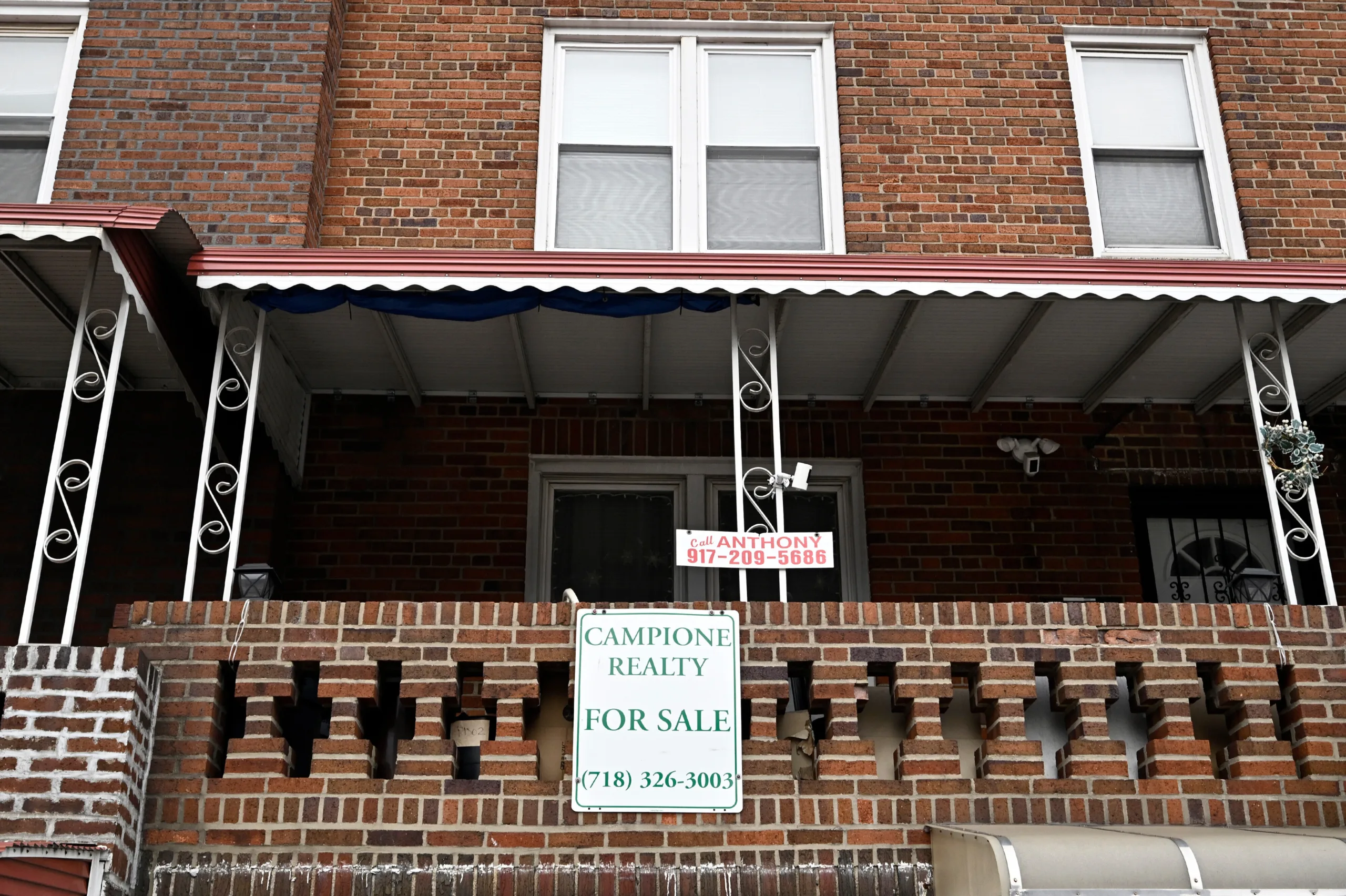
Few systems in New York are as universally acknowledged as broken — or as politically difficult to fix — as the property tax system. For decades, commissions have described it as “opaque, arcane, and inequitable.” The consequences are stark. Because of outdated formulas, assessment caps, and rigid property classifications, homeowners in Staten Island, the Bronx, and Queens pay effective rates 46% to 57% higher than comparable homeowners in Manhattan. Rental buildings are taxed at roughly double the rate of condos and co‑ops. And research from the NYU Furman Center shows that neighborhoods with higher shares of Black residents face disproportionately higher effective tax burdens than white neighborhoods.
The inequities are only part of the problem. The current system taxes both land and buildings, which perversely discourages construction and encourages speculation. In the midst of a historic housing shortage, New York’s tax code makes it more profitable to hold vacant land than to build on it.
There are several ways the city can begin to fix this — even before Albany takes up comprehensive reform. The Commission could recommend charter changes that modernize how the Department of Finance assesses property, requiring uniformity across boroughs and neighborhoods and updating how co‑ops and condos are valued. A more ambitious step would move New York toward a land value tax model: assessing buildings at competitive market value while assessing land based on its zoned development potential and surrounding infrastructure. This approach would shift tax burdens toward underused parcels and reduce the penalty on new construction.
Full reform will ultimately require state legislation, along with relief programs for homeowners facing increases. But the city can — and should — prepare the ground now. Modernizing the assessment process through charter revision is a meaningful step toward a fairer, more rational system.
2. Reform the Landmarks Preservation Commission to reflect the housing crisis
New York’s historic districts are a point of civic pride — and a source of significant regulatory burden. More than 150 districts across the five boroughs face strict design rules, longer approval timelines, building density constraints, and higher construction costs. The impact is uneven: only 3.3% of city tax lots fall within historic districts, but in Manhattan the figure is 30%.
These districts correlate with reduced housing production, and the neighborhoods they protect are disproportionately white and college‑educated. In a city struggling to house its workforce, historic preservation has become an inadvertent tool of exclusion.
The Landmarks Preservation Commission (LPC) was not designed to manage a housing crisis, but the charter can be updated to require it. The Commission could be required to consider housing impacts when designating districts or approving apartment consolidations, with particular scrutiny in neighborhoods identified as low‑growth under the Fair Housing Framework. This would not eliminate historic preservation — it would simply ensure that preservation decisions account for the city’s most urgent need.
Other states have already moved in this direction. California now allows certain construction in historic districts without discretionary hearings as long as contributing structures are untouched. Washington State requires owner consent for most new landmark designations on residential parcels, curbing the use of preservation as a preemptive anti‑housing tactic.
New York can adopt similar guardrails, balancing the protection of architectural heritage with the imperative to build more homes.
3. Modernize ULURP for public infrastructure
Last year, voters approved a charter amendment creating an “affordable housing fast track” for community districts that had built the least housing over the previous five years. The reform gave real force to the city’s fair housing plan, applying a version of the “builder’s remedy” to neighborhoods that had not met their housing obligations.
The city already tracks the distribution of many types of infrastructure — fire stations, libraries, sanitation facilities, parks — under a “fair share” framework meant to ensure equitable placement. But the system is failing. A 2023 comptroller audit found that 74% of municipal facility placements from FY2018 to FY2022 lacked independent review, and roughly 40% were sited in districts already dense with facilities. Some neighborhoods hold 100 times as many shelter beds as others; three of the four neighborhoods with no shelters are predominantly white.
Part of the problem is process. Public facilities must go through the Uniform Land Use Review Procedure (ULURP), which typically takes seven months. That timeline slows needed projects and entrenches inequities.
The Commission could recommend two charter changes. First, it should carve out a de minimis exemption for public capital projects costing $5 million or less — roughly the median project size — indexed to inflation and updated every five years. Routine work would move quickly; larger projects would still receive full review. This mirrors carve‑outs in environmental review and the expedited land‑use procedures approved last year for modest or publicly financed projects.
Second, the city could fast‑track public facilities in districts that lack their fair share, while requiring full ULURP in districts already overburdened. A new shelter or waste transfer station in a neighborhood without those facilities would move swiftly; the same project in a saturated neighborhood would receive the scrutiny it deserves.
A charter built for equity
The Commission on Government Efficiency has the chance to do more than streamline operations. It can reshape the systems that determine how fairly New York distributes its burdens and benefits. Modernizing property taxes, recalibrating historic preservation, and reforming ULURP for public infrastructure are not just efficiency measures — they are equity measures.
If the Mamdani administration is serious about building a government that “works hardest for those who work hardest,” these are the reforms worth daring to tackle.