



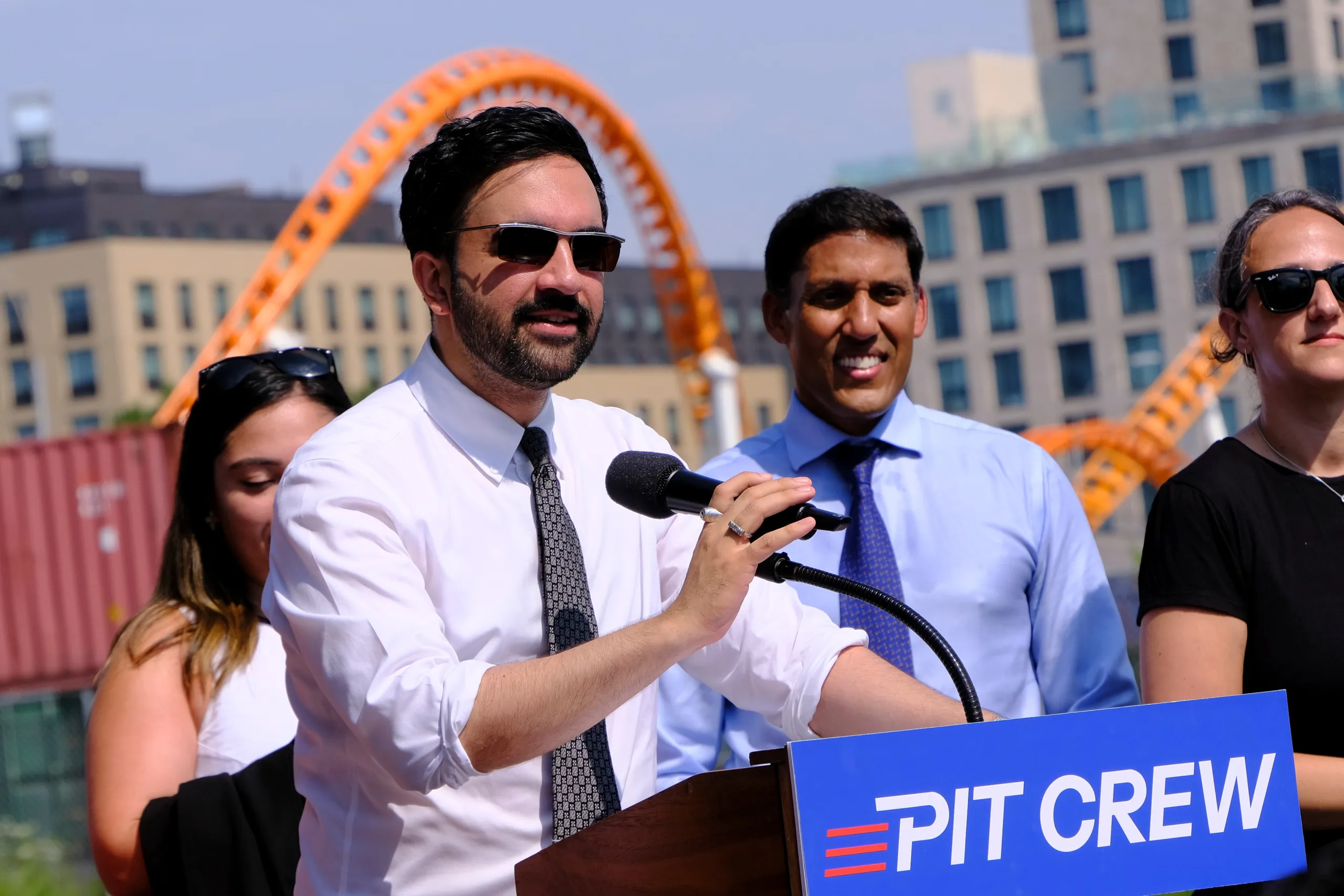
On Monday, Mayor Mamdani rode a go-kart around a Coney Island track. After a few laps, he launched the Public Interest Technology (PIT) Crews — five teams of technologists who will embed inside city agencies and build digital tools on short timelines to improve services. The first priority, he said, would be a portal to enforce the city’s new Click to Cancel rule. As expected, the video from the event was delightful; the mayor, as only he can, made city governance fun.
The PIT Crews are also a good idea — we at Abundance New York called for something similar. Service delivery is often atrocious within city government. New Yorkers wait far too long and have to jump through too many unnecessary hoops to get basic services. Housing vouchers, cash aid, and Fair Fares enrollment — the latter only reaching 41% of the eligible population — are all notable examples in the press recently. The city also struggles to hire the type of people who produce the tech services that are ubiquitous in our modern life. Against that backdrop, a small team of specialists, along with funding from the Rockefeller Foundation, would appear to be a great solution.
Put another way, the mayor, who leads a 300,000-person city workforce, announced that he would be hiring about 30 people — compared to the roughly 1,500 people who work at the Office of Technology and Innovation (OTI) that will supervise these teams and the roughly 6,000 IT professionals who work across the city government — at a salary of about $174,000 on average each, plus some extra funding from the $6 billion Rockefeller Foundation. At just 2% of OTI, the initiative would still be a strong start if it could scale up or become permanent, but that won’t be possible. These positions are likely “exempt” roles — not requiring a civil service exam — and such roles are limited. Given the reliance on outside funding, they’re also likely better paid than equivalent government roles.
In building PIT Crews outside the civil service system, the mayor is implicitly acknowledging that the system doesn’t work. The city runs more than 3,000 civil service titles — including, as Brendan Hellweg and Youssef Kalad recently wrote, Carriage Upholsterer and Director of Puppetry — but none for software engineer, data scientist, or product manager. More than 80% of jobs require a civil service exam, many not even offered every year, and candidates typically wait 15 months after testing before starting a job.
The result is a city that can’t hire whom it needs to do the work taxpayers depend on. Four years after the pandemic-driven spike, vacancy rates are still above pre-2020 levels. The mayor’s own transition team struggled to hire enthusiastic, often qualified supporters: of 80,000 people who volunteered to work for the new administration, only 31 were hired as of the spring. This year’s budget negotiations were even sidetracked by arguments over how to account for so many vacancies.
The problem is bad in the abstract but especially acute for a mayor with lofty, necessary goals. Building 200,000 new homes is a stretch if the Department of Buildings and Department of Housing Preservation and Development have 12% and 9% vacancy rates, respectively. Faster buses require city Department of Transportation staff to collaborate with the MTA — hard to do with an 11% vacancy rate. There’s no expanding day care without day care workers or caseworkers.
Faced with this thicket of hiring problems, it’s tempting to forgive Mamdani for taking a quick win. But such shortcuts can be harmful long-term. As Jennifer Pahlka — who led similar temporary, high-capacity teams in the Obama administration — has written, these measures can act as a “pressure valve” that lets steam out of bigger reform efforts. As New Yorkers’ frustration with poor digital services grows, and the mayor’s own frustration mounts at being unable to deliver on his priorities, pressure could build for wholesale civil service reform. But if PIT Crews can just swap the tires quickly and keep the car moving, the race continues and the underlying problem becomes someone else’s to solve.
It doesn’t have to be this way. The mayor could use the momentum from PIT Crews to build lasting change rather than postpone the inevitable. Two moves would turn a good demonstration into lasting capacity.
First, the city should opt into NY HELPS, the state program Governor Hochul created and recently extended through June 2028. It waives the up-front exam for designated titles while still requiring candidates to meet minimum qualifications and clear a one-year probation. It has produced 42,506 state hires and 17,667 local hires through May without the patronage critics predicted, and 52 of the 57 counties outside the city have opted in. New York City tried to join under Mayor Adams and dropped the effort after union objections. Mamdani has so far signaled he’ll avoid the same fight. Unions argue that New Yorkers who studied and paid exam fees shouldn’t be leapfrogged; the city can address this by refunding affected exam-takers (it’s already planning to waive some fees) and guaranteeing interviews for high scorers. Concerns about civil service diversity — a legitimate and important issue — are misplaced here: a SUNY Rockefeller Institute analysis found candidates of color often score better on structured experience reviews than on multiple-choice tests.
Second, lead on lasting civil service reform. Several ideas have already been offered in testimony to the mayor’s Commission on Government Efficiency. Robert Gordon of the Recoding America Fund has proposed a body dedicated to building the city workforce, noting that vacancies push agencies toward contractors who cost far more than in-house staff. Caitlin Lewis of Work for America has outlined work-sample assessments, band scoring, and exam waivers for licensed roles as immediate fixes. Abundance New York has proposed a five-year workforce plan, modeled on the capital strategy, to ensure regular revision of outdated rules. The commission may decline to take this up through the charter, but if so, the mayor should bring it to the council and the state legislature.
Mamdani told supporters on election night that excellence would become the expectation across government, not the exception. For now, the PIT Crews are an exception — but with work, we can change what we expect.